7 Mistakes Companies Make When Attending Healthcare Conferences
TL;DR
Companies often invest significant time and money attending healthcare conferences but fail to see meaningful returns. The most common mistakes include attending without a plan, treating conferences like trade shows, pushing sales conversations too early, failing to engage with attendees, and neglecting follow-up after the event. Companies that approach healthcare conferences with discipline, preparation, and a long-term mindset consistently gain more insight, stronger relationships, and greater business value.
Why Healthcare Conferences Often Fall Short for Companies
Healthcare conferences are expensive. For many organizations, attending a medical conference represents a meaningful investment of both money and executive attention.
Despite this investment, companies often return with limited results. In most cases, the issue is not the conference itself, but how companies approach attending conferences within the healthcare industry.
Mistake 1: Attending Without a Clear Plan
One of the most common mistakes companies make when attending healthcare conferences is showing up without a defined plan.
Healthcare conferences pack many sessions into a short period of time. Without advance planning, companies drift between sessions and miss conversations that could have mattered most.
A clear plan should answer basic questions before arrival:
Which sessions align with current priorities
Which attendees or organizations are important to meet
What outcomes would justify the time and expense
Without this clarity, attendance becomes reactive rather than purposeful.
Mistake 2: Treating Healthcare Conferences Like Trade Shows
Many companies approach healthcare conferences the same way they approach trade shows. This is a costly mistake.
Trade shows reward visibility and volume. Healthcare conferences reward credibility, context, and conversation. Collecting large numbers of contacts rarely leads to progress in a relationship-driven industry.
In healthcare, most attendees are looking to learn, discuss shared challenges, and connect with people who understand their world.
Companies that fail to adjust their approach often find the room disengaged.
Mistake 3: Leading With a Sales Pitch
Pushing a sales message early is one of the fastest ways to end a conversation.
Healthcare executives attend conferences to talk through problems, compare approaches, and hear how peers are responding to change. When companies lead with product features or pricing, interest quickly fades.
Effective conversations begin with listening. Asking thoughtful questions about priorities, constraints, and current initiatives builds credibility. Only after understanding the person and organization does it make sense to discuss potential solutions.
Most people remember the quality of the conversation more than the details of what was presented.
Mistake 4: Failing to Engage During the Event
Another common mistake is treating the conference as time away from work without fully engaging in the event itself.
Some of the most valuable interactions happen outside formal sessions. Coffee breaks, meals, hallway conversations, and small group discussions often provide more insight than sitting quietly in a large room.
Engagement requires presence. That includes putting devices away, moving between sessions, and being open to conversations with new people.
Mistake 5: Collecting Contacts Without Context
Meeting new contacts only matters if there is substance behind the exchange. Without capturing notes, context, or key takeaways, contacts quickly lose relevance once the event ends.
Companies often hope follow-up will happen naturally. In practice, without intention and organization, it rarely does.
Mistake 6: Failing to Use Notes and Share Knowledge
Healthcare conferences generate ideas, data, and new perspectives. Yet one of the most overlooked mistakes occurs after attendees return to the office.
Sharing key takeaways internally multiplies the value of attendance. Even a brief recap can help teams align, refine strategy, or identify the next steps.
Mistake 7: Weak or Delayed Follow-Up
The period immediately following a conference matters more than many companies realize.
Waiting weeks to follow up weakens momentum. Sending generic messages without reference to the original conversation signals low interest. Forgetting to deliver promised information damages credibility.
Strong follow-up is timely, specific, and relevant. It reinforces the conversation and creates a clear reason to continue the dialogue.
How More Effective Companies Approach Healthcare Conferences
Companies that consistently gain value from healthcare conferences take a disciplined approach.
They plan in advance. They research attendees. They attend sessions selectively rather than trying to see everything. They prioritize conversation over presentation and listening over pitching.
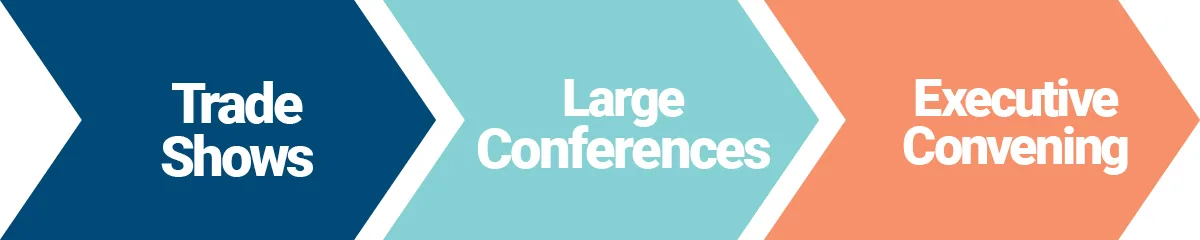
They also recognize that different events serve different purposes. Large conferences and trade shows can create awareness. Smaller, more focused gatherings often lead to deeper discussion and stronger relationships.
Where Executive Convening Fits
Some organizations seek conference environments designed to reduce these common mistakes.
THMA Executive Convening events and healthcare conferences are structured around focused discussion, limited attendance, and peer-level engagement. Health system and industry leaders meet in smaller groups where participation is expected and conversation is central.
Agendas focus on shared challenges rather than vendor presentations. Networking opportunities are integrated throughout the program. Follow-up continues through research, briefings, and ongoing engagement rather than ending when the event closes.
For companies that value depth over volume, this approach aligns more closely with how healthcare leaders prefer to connect.
Final Thoughts
Healthcare conferences can deliver meaningful value, but only when approached with intention.
The most common mistakes companies make when attending healthcare conferences are avoidable. Planning ahead, engaging fully, listening carefully, sharing knowledge, and following through all change the outcome.
When companies align their approach with how relationships form in the healthcare industry, conferences become more than events. They become a foundation for long-term learning, trust, and progress.