57% of U.S. Adults Turn to the Internet First When New Symptoms Appear
Updated on 5/6/2026
Author: Andrew Reed, Assoc. Director, The Health Management Academy
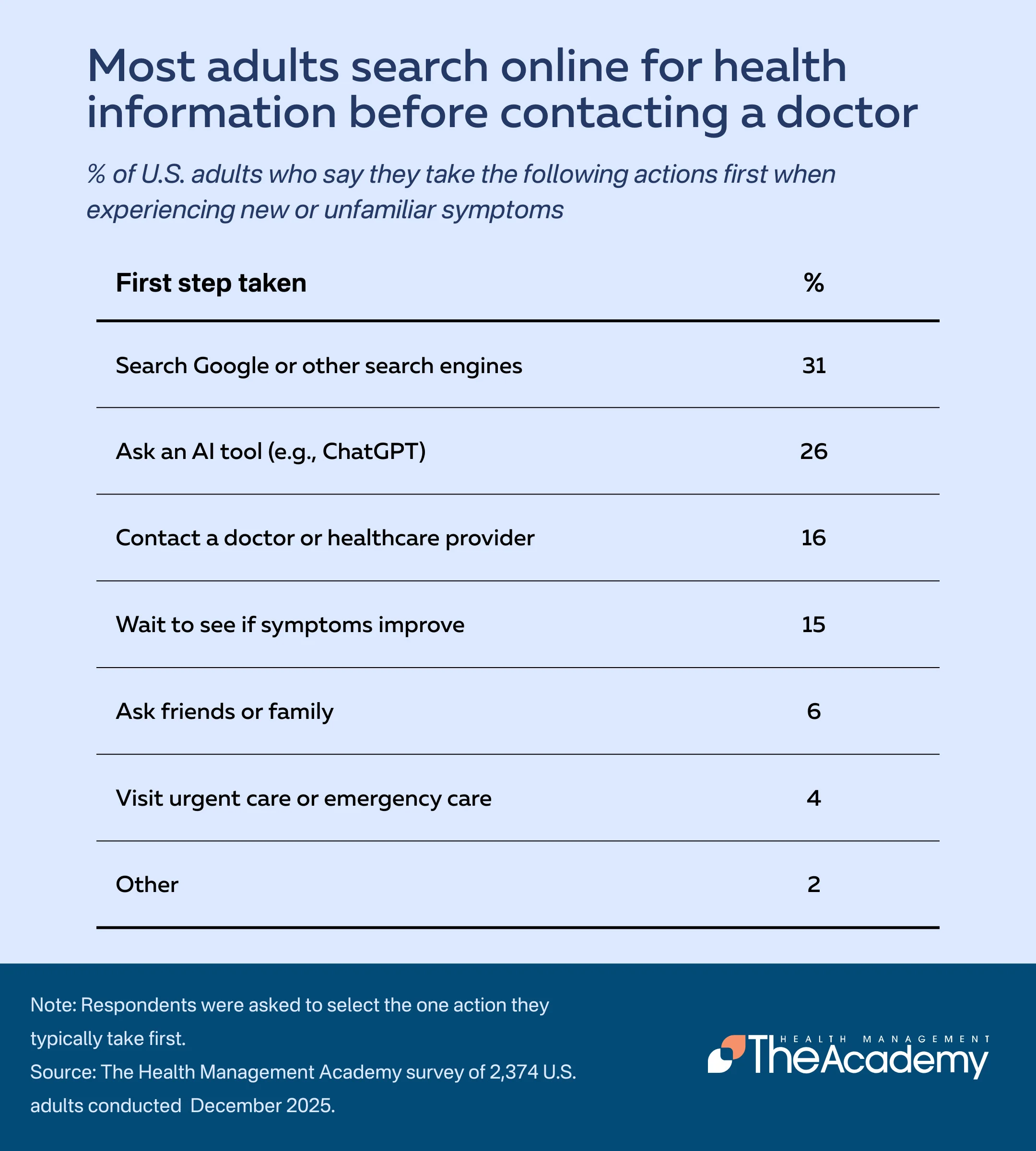
When something feels off, most Americans no longer reach for the phone to call their doctor. They reach for their phone to search their symptoms online.
According to a new survey from The Health Management Academy, 57% now turn to the internet, either a search engine or AI, before contacting a healthcare provider when they notice an unfamiliar symptom that they deem worthy of intervention. That includes 26% who say their first move is to ask an AI tool, such as ChatGPT.
And while online research can help patients feel more informed, we’re learning how self-diagnosis is often inaccurate, rarely corroborated, and increasingly linked to anxiety, delayed care, and DIY treatment without clinical guidance.
Key Takeaways
57% of Americans consult online sources first when experiencing symptoms: 31% search Google, while 26% ask AI like ChatGPT, compared to just 15% who contact their doctor first.
Of those searching for symptoms, 69% say they search online specifically to avoid the cost of a doctor visit, while another 44% cite lack of access to healthcare.
Gen Z shows the highest rate of mental health self-diagnosis at 55%, compared to 38% of Millennials, 19% of Gen X, and just 11% of Baby Boomers.
Anxiety disorders (66%), depression (60%), ADHD (44%), and PTSD (20%) are among the most commonly self-diagnosed mental health conditions.
Nearly half of adults (49%), including 78% of Gen Z, say social media content influences mental health self-assessment.
When Your First Call Isn't to a Doctor
Whether it is a persistent headache, sudden fatigue, or mood changes, millions of people now turn to search engines, social media, or AI tools before contacting a healthcare provider.
As patients increasingly rely on AI tools to interpret symptoms before seeking care, healthcare organizations are beginning to explore how clinician-facing AI tools can help bridge the gap between self-directed research and professional evaluation.
To learn more about how U.S. adults are using online sources to evaluate symptoms and make healthcare decisions, The Health Management Academy conducted a national survey and analysis of search behavior and found that online health research is now a common first step in responding to new health concerns, often driven by cost, access, and time-related barriers to professional care.
Among those who use the internet for health information, 58% report searching online every time or most of the time they experience symptoms, while only 7% say they never look up symptoms online.
Looking up health symptoms online has become a routine part of how many adults respond to new or unfamiliar health concerns. The findings show that most adults search for health information at least occasionally when symptoms arise, with a substantial share doing so frequently or most of the time. Only a small minority report never looking up symptoms online.
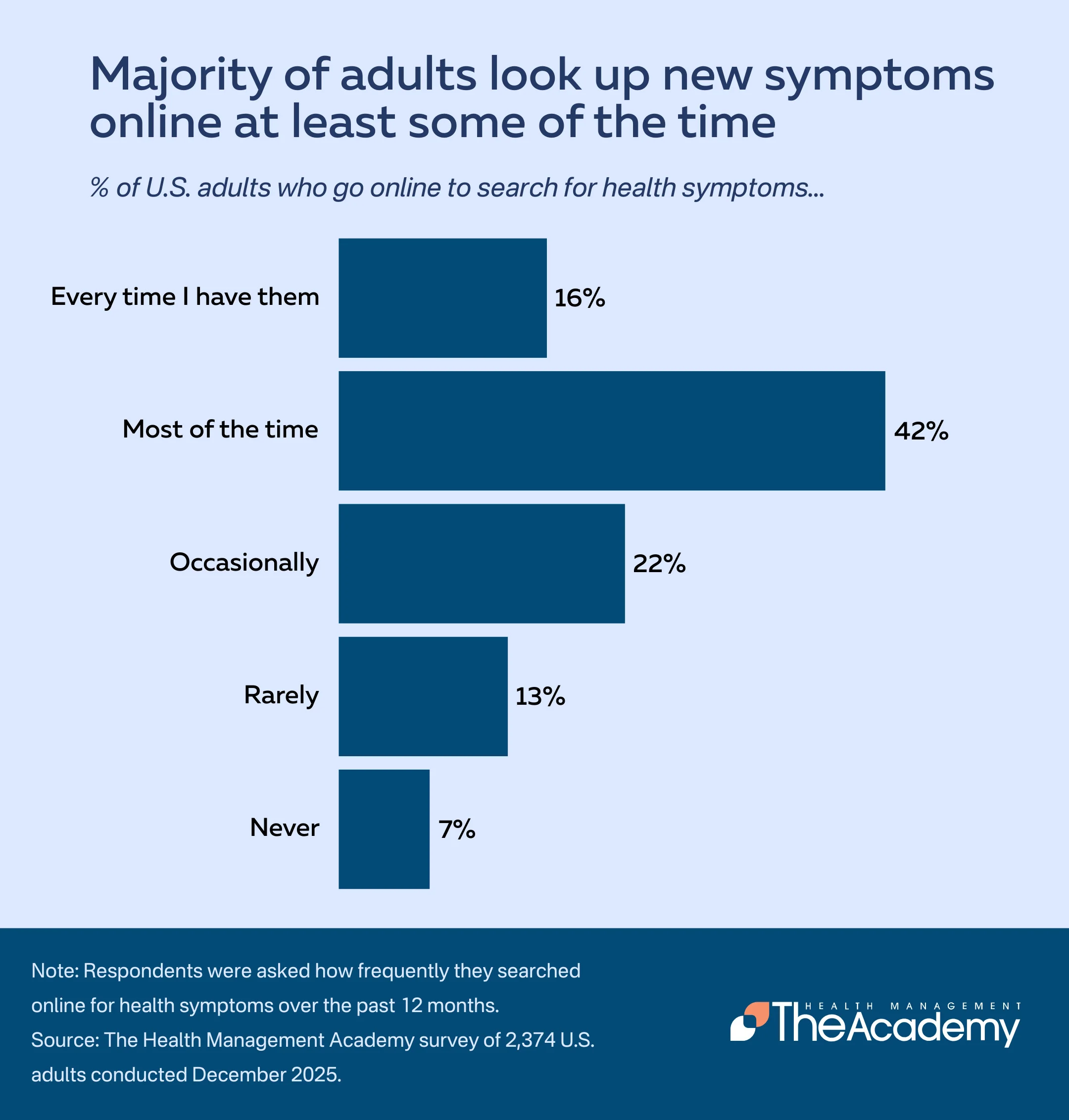
One could determine that symptom searching has become part of how we decide whether care is worth the time and cost. In many cases, people research symptoms first and only seek professional care if concerns persist or escalate.
Why Americans Are Skipping the Doctor—At Least Initially
Upon experiencing new or unfamiliar symptoms, many now pause before scheduling a doctor’s appointment. Instead of immediately contacting a healthcare provider, they often turn to the internet to gather information, assess possible causes, and decide whether they deem medical care necessary.
For most, this isn’t an alternative to professional treatment; instead, it serves as a tool to weigh urgency, manage uncertainty, and understand what might be happening before committing time and money to a medical visit. As healthcare accessibility remains uneven, online research is seen as a practical first filter in the decision-making process.

The financial barrier is hitting younger Americans especially hard. In the past 12 months, 42% of Gen Z and 41% of Millennials say they’ve skipped medical care because they couldn't afford it, compared to just 21% of Baby Boomers.
Conclusions Drawn From Online Symptom Searches
Online symptom research often leads people to form conclusions about what may be causing their symptoms before seeking professional care. The data shows that many adults have, at some point, believed they had a specific health condition based on their own research.

The conditions most commonly self-identified tend to involve symptoms that are widespread or nonspecific, including several mental health conditions as well as common physical concerns. While researching symptoms can be a useful starting point, the findings suggest that without clinical input, self-assessment may blur the line between information gathering and diagnosis, especially when symptoms overlap across multiple conditions.
Self-Diagnosis is Common, but Often Unverified
The growing reliance on online information has made self-diagnosis increasingly common. The majority of respondents, 59% say they have self-diagnosed a health condition at least once based on what they found online. Nearly one-third report doing so multiple times.
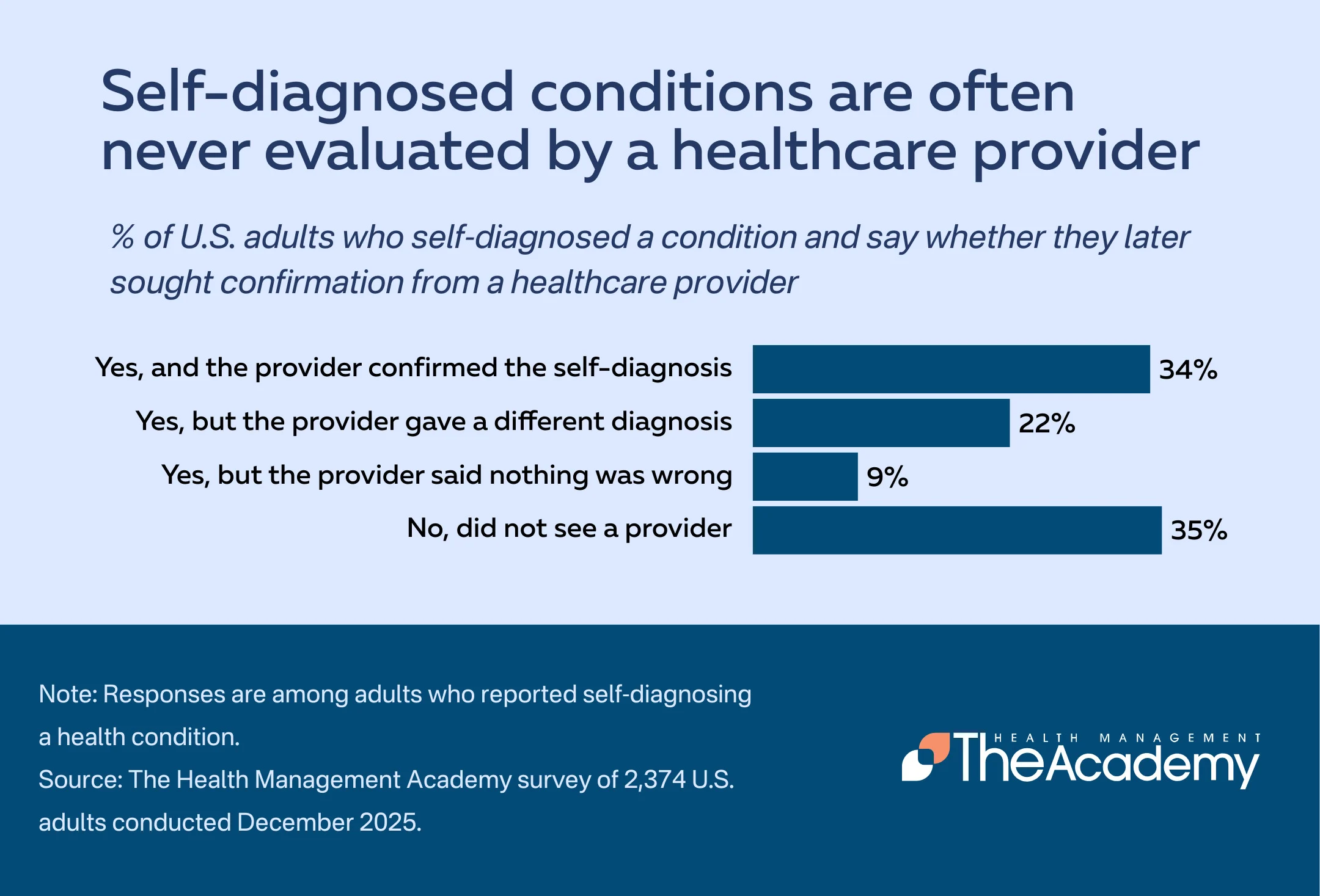
This means that more than one-third (35%) of self-diagnosed conditions are never clinically assessed, and among those that are, roughly one in three (31%) turn out to be incorrect. While online research may help people identify potential concerns, it frequently lacks the nuance provided by physical exams, diagnostic testing, and clinical experience.
Self-diagnosis frequently leads to self-treatment. In the past year, 71% of Americans reported treating a health issue without seeing a doctor, using over-the-counter medications, supplements, or lifestyle changes.
Only 14% say they always consult a healthcare provider before treating symptoms. For the remainder, care decisions are increasingly made independently, based on personal judgment and online research.
Mental Health Conditions Are Commonly Self-Diagnosed Online
Self-diagnosis is particularly common in mental health, where symptoms are often subjective and widely discussed online, while wait times for new patients can often span many months. Overall, 29% of Americans report having self-diagnosed a mental health condition based on online research.
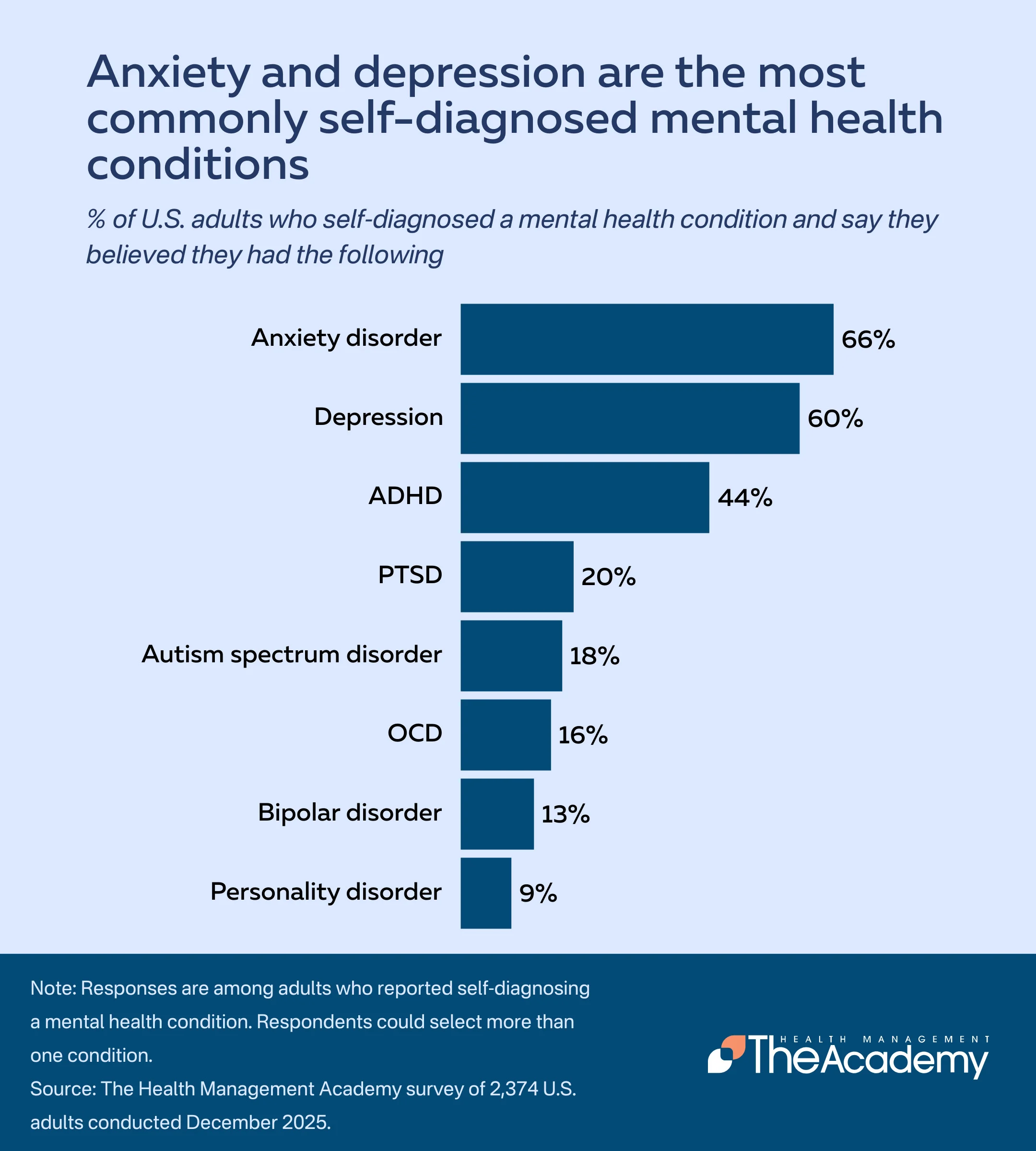
Mental health self-diagnosis is especially common among Gen Z adults, perhaps attributed to both greater openness around mental health and heavier exposure to online health content. More than half (55%) of Gen Z respondents reported having self-diagnosed a mental health condition based on online research, a rate far higher than that of older generations. Anxiety, depression, and ADHD were the most frequently self-identified conditions.
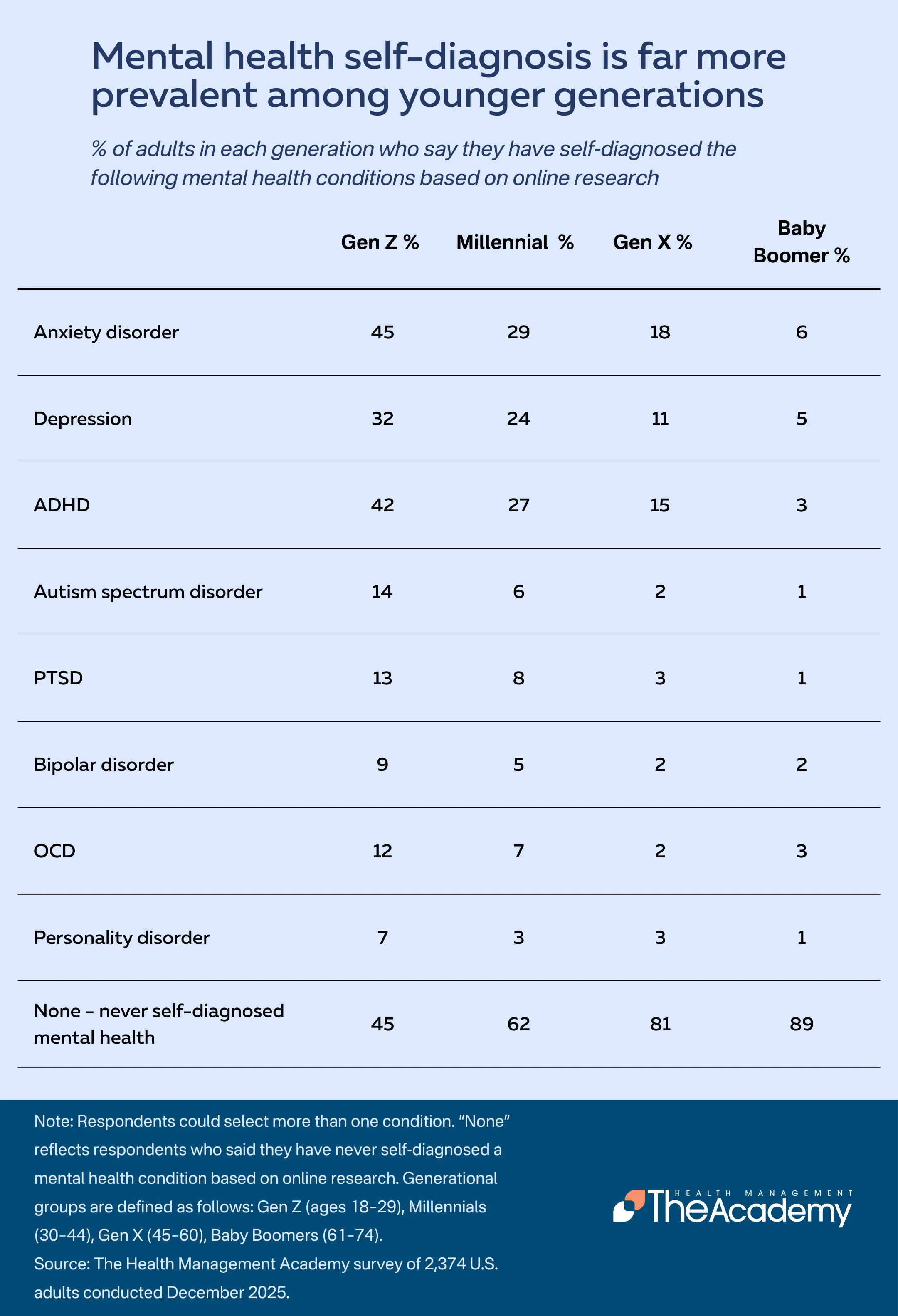
While increased awareness and reduced stigma may encourage earlier recognition of symptoms, the findings also suggest that frequent exposure to mental health content, particularly on social media and digital platforms, can blur the distinction between everyday experiences and clinically diagnosable conditions. As a result, Gen Z is more likely than other age groups to interpret personal challenges through a diagnostic lens, often before seeking professional evaluation.
How Online Content Shapes Mental Health Awareness
Social media has become an increasingly common source of mental health information, particularly for younger adults. Short-form videos, personal stories, and symptom-based content can make complex conditions feel familiar and relatable. While this visibility can reduce stigma and encourage conversations about mental health, it can also oversimplify how conditions are defined and diagnosed, especially when symptoms can vary so much from person to person.
Among adults who report having self-diagnosed a mental health condition, when respondents were asked whether social media content had ever made them believe they might have ADHD, autism, or another mental health condition, responses followed a generational trend.
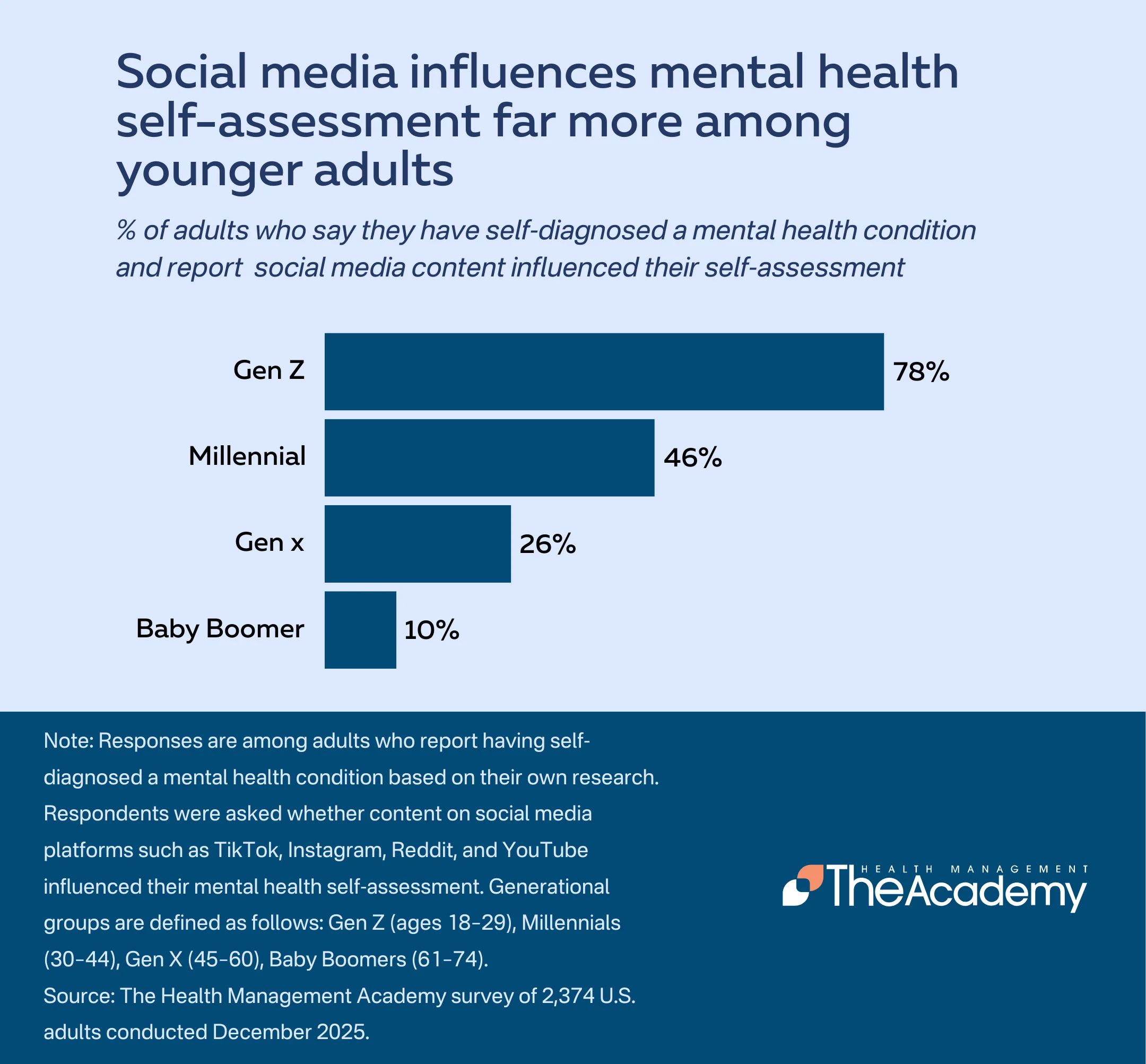
Reports of social media influence are highest among Gen Z adults who have self-diagnosed (78%) and decline steadily across older generations, including 46% of Millennials, 36% of Gen X, and 15% of Baby Boomers.
Symptom Searching Is Fueling Anxiety More Often Than Reassurance
Searching for symptoms online often has the opposite effect of what people intend, increasing worry and uncertainty rather than providing clarity or peace of mind.
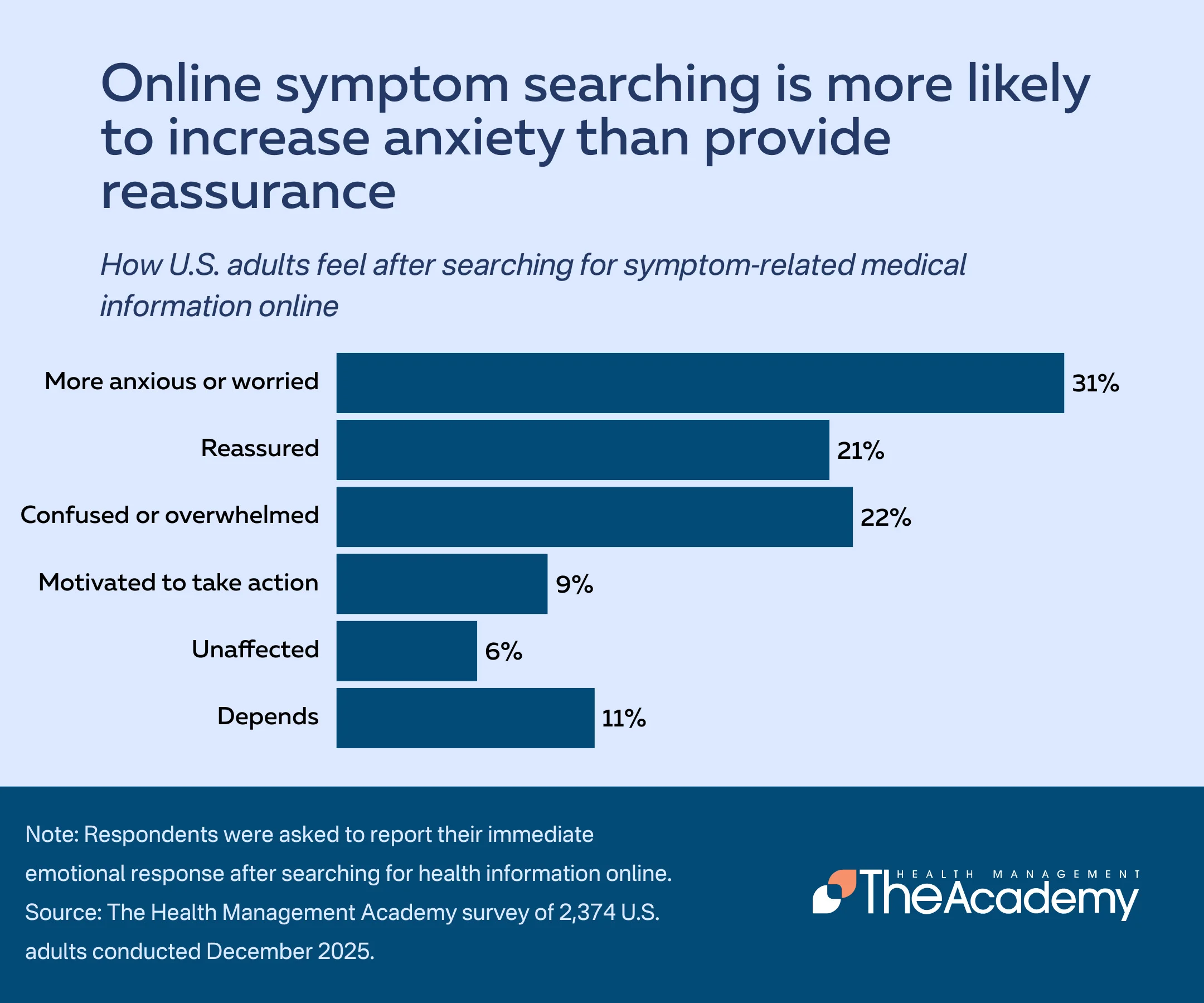
Though likely intended to help people understand what they are experiencing and reduce uncertainty about their health, online symptom searching frequently has the opposite effect. About three in four adults say that searching for health symptoms online has caused unnecessary anxiety at some point, including nearly half (49%) who say it happens frequently or sometimes.

Younger generations report higher levels of anxiety associated with online symptom searching than older age groups, suggesting that greater digital exposure does not necessarily translate into greater reassurance when it comes to health concerns.
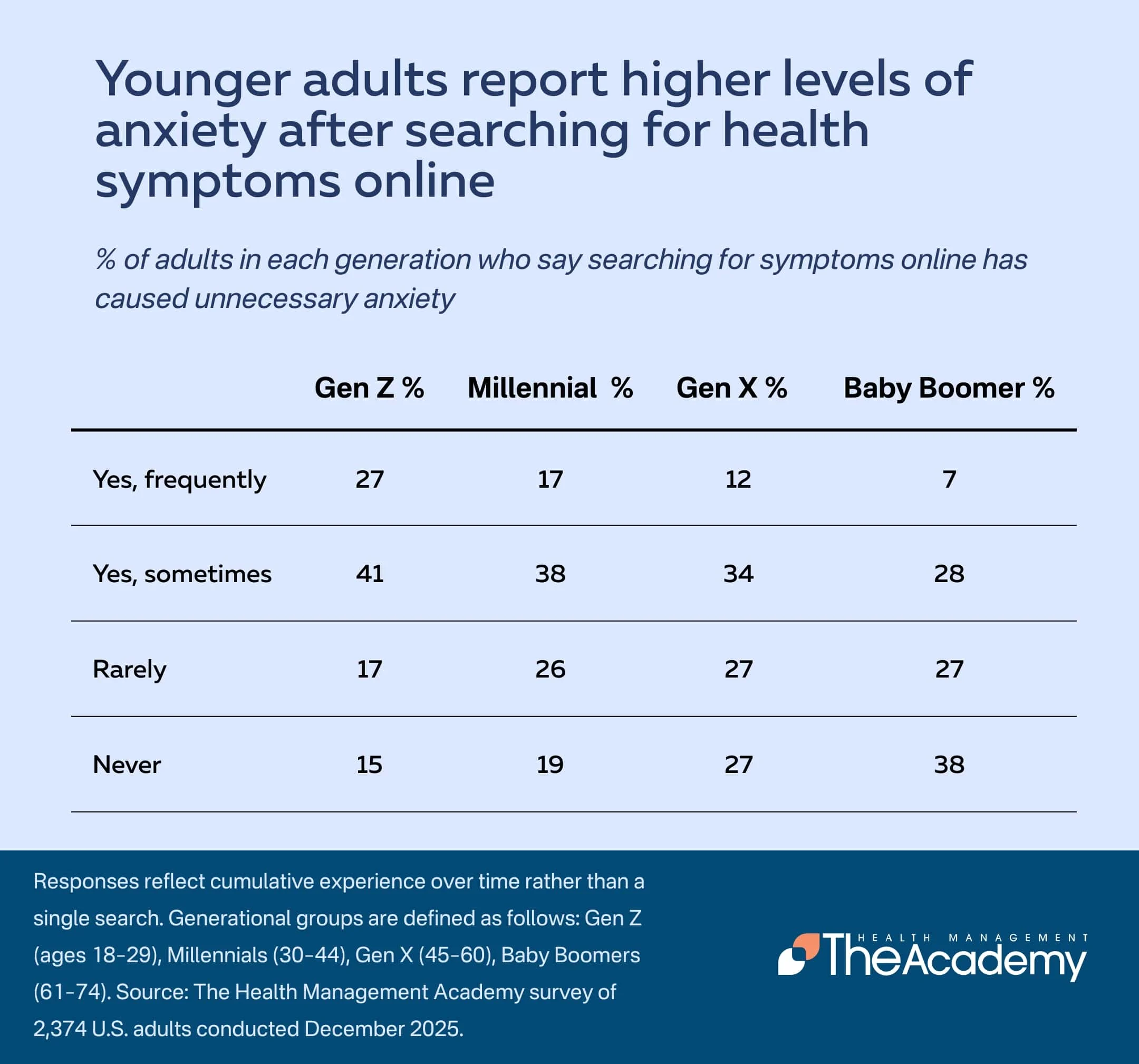
For individuals already concerned about their health, exposure to broad lists of potential conditions, many of them serious, can heighten anxiety rather than reduce it. This effect is amplified when searches are repeated over time or across multiple platforms.
What We’re Searching for, State by State
To complement the survey findings, The Health Management Academy analyzed Google Trends interest across a set of self-diagnosis–related queries (spanning health anxiety, symptom searching, mental health, ADHD/autism, and serious conditions.
Mental health-related searches dominate in many states, particularly terms related to depression, anxiety, ADHD, and autism. In several regions, searches such as “symptoms of depression,” “ADHD symptoms in adults,” and “autism symptoms in adults” emerged as the strongest signals. This aligns with the survey findings showing that mental health is the area most commonly self-diagnosed online and suggests that access barriers and long wait times for behavioral health services may be contributing to increased reliance on digital research.
Overall, we see individuals are using the internet to interpret symptoms, assess risk, and decide whether professional care is warranted. The specific terms may vary by region, but the underlying behavior is consistent: online searching has become a central step in how people navigate uncertainty in the healthcare system, particularly when access to timely, affordable care is limited.
Methodology
The survey was conducted online among 2,374 U.S. adults ages 18–74. Data were collected in December 2025. The sample included adults across four generational age groups: Gen Z (ages 18–29; 26.5%), Millennials (ages 30–44; 31.3%), Gen X (ages 45–60; 23.8%), and Baby Boomers (ages 61–74; 18.4%). The gender composition of the sample was 49.3% female, 49.7% male, and 0.9% nonbinary. Respondents were asked about their use of online sources for health information, experiences with symptom searching and self-diagnosis, emotional responses to online searches, and perceptions of social media influence.
State-level search patterns are based on Google Trends data over the twelve months for a set of self-diagnosis-related keywords spanning symptom searches, mental health, ADHD/autism, serious conditions, and health anxiety. Data reflect the most recent 12-month period available at the time of analysis.
Fair Use
This content is available for non-commercial reuse with proper attribution. When sharing, please include a link back to this page as the source.