THMA vs. Traditional Healthcare Events: What Sets Executive Convening Apart
TL;DR
Most healthcare events are built for scale. THMA’s Executive Convening is built for outcomes. Instead of crowds, booths, and surface-level conversations, THMA creates closed-door environments where health system and industry executives engage as peers, tackle real problems, and build relationships that extend well beyond the event itself.
The Problem With the Big-Tent Conference Model
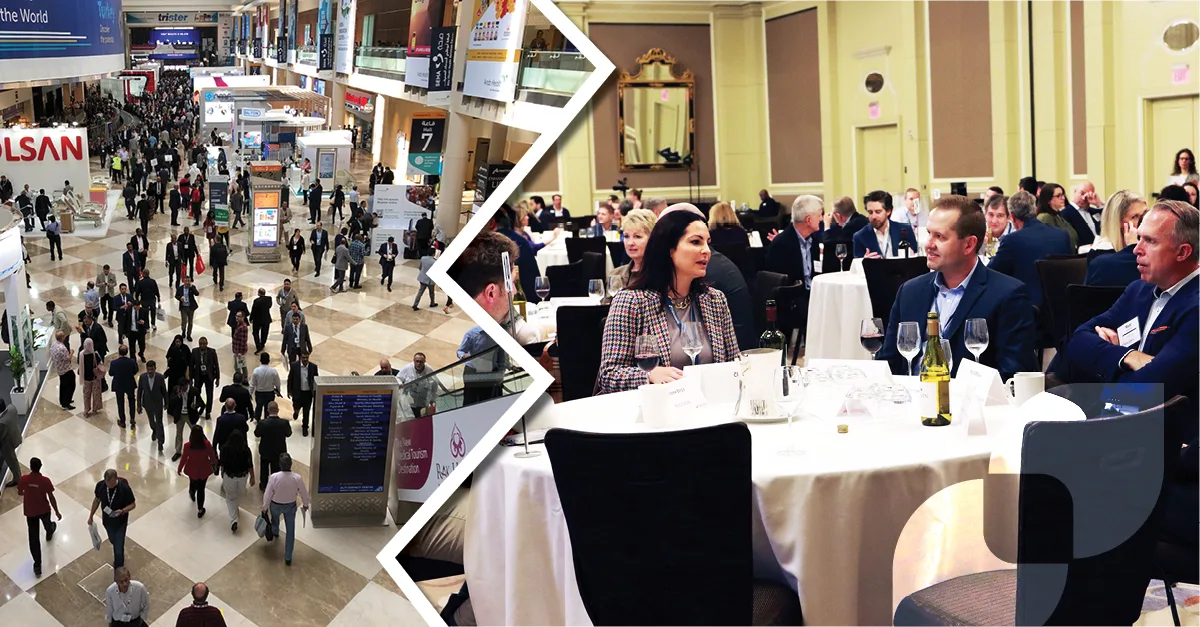
Healthcare conferences weren’t designed for today’s executive reality.
Large events reward attendance, not participation. Everyone is busy, but very little actually moves forward.
For health system leaders, this often means:
Limited time with true peers
Few opportunities for candid discussion
Minimal follow-through once the event ends
For industry executives, the experience is just as constrained:
Difficulty engaging real decision-makers
Conversations that stop at introductions
Noise that overwhelms substance
Big conferences still serve a purpose. They are good for exposure and awareness. But they are not built for executive-level problem solving.
Executive Convening Is a Different Model Entirely
Executive convening starts with an assumption that progress happens in small, trusted rooms.
THMA forums are intentionally designed around that idea. They bring together a limited number of health system executives and industry leaders who share responsibility for the discussion and outcomes.
There are no open registrations. No booths. No passive audiences.
Instead, the format is built around:
Closed-door, role-based peer groups
Curated participation on both sides of the table
Agendas shaped by health system priorities
Time structured for dialogue, not presentation
A Peer-Level Environment Changes Everything
Traditional conferences mix roles, seniority levels, and objectives. That diversity has value, but it also limits how open conversations can be.
Executive Convening is role-specific by design. COOs sit with COOs. CFOs with CFOs. Service line leaders with their peers.
This alignment creates a shared context quickly. There is less explaining and more problem-solving. And industry participants benefit as well by hearing directly how executives think, prioritize, and evaluate decisions, without filters or intermediaries.
Relationships That Extend Beyond the Event
One of the biggest limitations of traditional conferences is what happens after they’re over. Executive convening is built to extend beyond the room.
THMA forums are part of an ongoing community. Relationships develop across multiple touchpoints throughout the year. Conversations continue between events and context carries forward.
For industry leaders, this creates:
Continuity with health system decision-makers
Better understanding of evolving priorities
More informed, relevant engagement over time
For health system executives, it creates a trusted peer network that persists well beyond a single meeting.
Why This All Matters
Executives do not need more events. They need better ones.
Executive convening reflects how real decisions are made in healthcare today through trust, context, and sustained dialogue. No, it is not a replacement for every conference. But for organizations that need to engage senior health system leaders in meaningful ways, it offers a fundamentally different path.
THMA’s Executive Convening model reflects how healthcare leaders actually work today.