Executive Summary
The 2026 Health Impact Alliance (HIA) Governance & Resourcing Survey Findings Report features a representative sample of 25 leading and independent health systems. The survey analyzed trends across governance, budget & grant allocations, and responsibilities within departments/offices that lead equitable impact strategies at health systems. Respondents, primarily at the System Director & Vice President levels or higher, represented non-profit integrated delivery networks (IDNs) ranging from medium-sized and regional systems to some of the largest multi-state IDNs, allowing for a comparative analysis of equitable impact resourcing across varying scales.
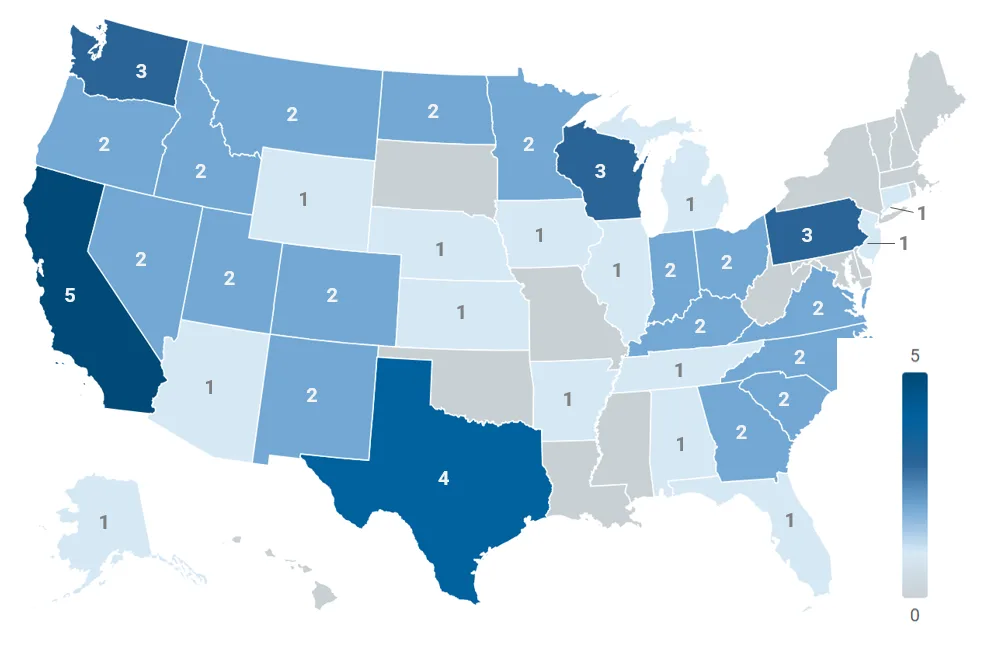
Survey data reflects input from 25 health systems operating across 34 states, with CA, TX, PA, WA, and WI being the most represented.

What's Inside
This findings report highlights how equitable impact infrastructure, including resourcing & governance approaches, have evolved over time across the following categories:
Team Structure: Dedicated FTE counts, highest seniority level for dedicated executives, as well as the structure of dedicated office/departments
Health Equity Governance: Equitable impact governance approaches, including reporting lines, changes in language for department/office naming conventions, and shifts in governance over the past year
Budget & Resources: Dedicated operational budgets, grant funding, and allocation across multiple categories, including, but not limited to: community-facing initiatives, clinical disparity gap closure initiatives, and community capacity-building initiatives
Roles & Responsibilities: Self-reported responsibilities and roles and extent of collaboration with marketing/communications, government affairs, and human resources functions