
CMS recently finalized a major rule for the Affordable Care Act that it says will offer consumers more choices in response to concerns about premium affordability. Critics argue the changes will instead weaken coverage, leave more patients in debt, and create delays in care if patients forgo visits due to higher out-of-pocket costs.
The changes, which phase in over the next two years, include:
Expanded catastrophic plan access:
Catastrophic plans—which offer lower premiums in exchange for very high deductibles—will be available to more enrollees, including adults ages 30 and over who qualify for a new hardship exemption. Insurers can also sell catastrophic plans with terms of up to 10 consecutive years.
Removal of standardized plan requirements:
Insurers are no longer required to offer plans with specific levels of cost sharing on HealthCare.gov, and the cap on the number of non-standard plans they can offer is eliminated. All plans must still continue to cover the ACA’s essential health benefits to be considered a qualified health plan.
Introduction of "non-network plans":
Beginning in 2028, plans that don't contract with a provider network can be certified for sale on the exchanges; instead of negotiated rates, they pay enrollees a fixed reimbursement amount for services rendered by any provider. Plans are required to ensure that there are local providers willing to accept these rates.
Stricter subsidy eligibility verification:
ACA exchanges must perform additional income verification for enrollees whose reported income falls below 100% of the federal poverty level, and (implementing OBBBA mandates) subsidies are barred for undocumented immigrants and certain lawfully present low-income immigrants previously eligible.
According to the regulatory impact analysis conducted by CMS, the rule will result in between 1.2M and 2M fewer enrollees in 2027, with further coverage losses in future years. CMS also projected the impact of healthier enrollees leaving the exchanges on premiums.
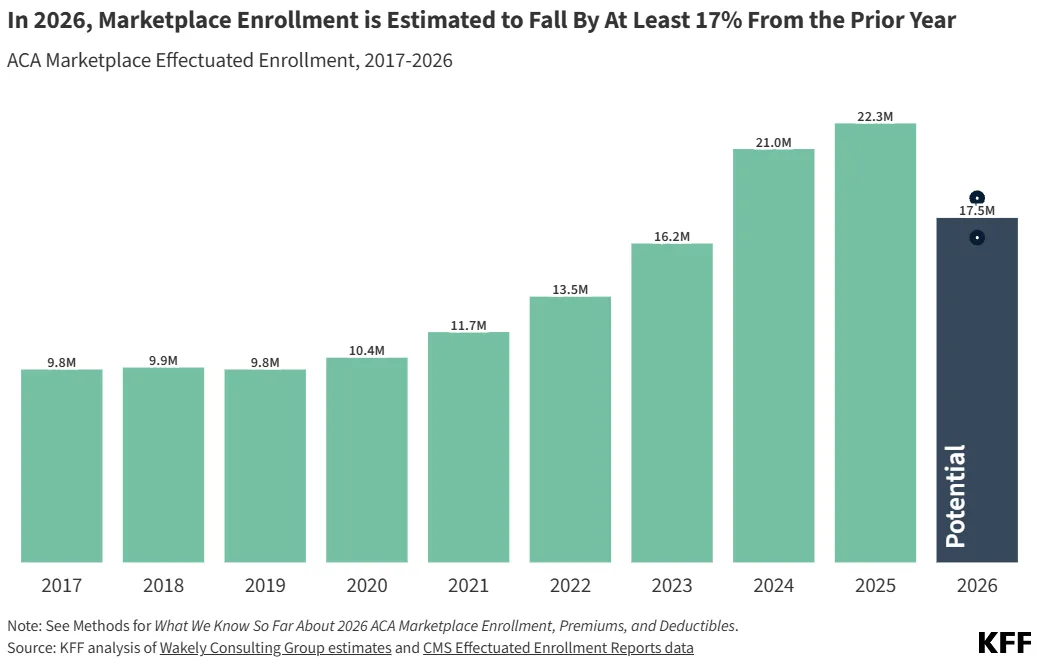
The changes come in the wake of an ongoing enrollment exodus: ACA plan signups fell by over 1 million for 2026, and effectuated enrollment is projected to fall by roughly 4.8 million from 2025 levels (to about 17.5 million) as unpaid premiums, mid-year cancellations, and other forms of attrition continue throughout the year, according to projections by the Kaiser Family Foundation.
So What?
For health systems, the combination of ACA enrollment losses and thinner benefit designs will pressure both payer mix and patient collections, compounding the financial strain already building from last year’s Medicaid budget cuts.
1. Higher cost sharing and coverage losses will lead to more uncompensated care and more price-sensitive consumers.
According to a recent flash report from Kaufman Hall, hospital bad debt and charity care was up by 8% year-over-year at the beginning of 2026, and up 40% since 2023. Adding millions more to the ranks of the uninsured will continue to push up this number, and those that remain in coverage are increasingly in high-deductible plans with narrower benefits that could ultimately result in sticker shock for patients that end up needing acute care.
This erosion in payer mix could serve as a forcing function to proactively overhaul weak links in the revenue cycle and patient financial experience: upfront price estimates, point-of-service collections, real-time eligibility verification, presumptive charity screening, and self-pay collection workflows.
The creation of flat-fee “non-network plans” and expanded availability of higher deductible catastrophic plans will create a meaningful slice of the market that is more sensitive to upfront prices than in-network status. This could turn transparent pricing into a meaningful competitive lever for ASCs and imaging centers.
2. The Trump administration isn’t looking to eliminate the exchanges, but will reorient them towards a more conservative vision of healthcare.
While there hasn’t been much talk of outright ACA repeal like we saw in the first Trump term, these regulatory changes align with a longstanding conservative push for leaner coverage, greater state flexibility, tighter eligibility, and a market that looks more like pre-ACA individual insurance. Reduced plan standardization, the deferral of network adequacy determinations to states, and the embrace of catastrophic and non-network plans all point the same direction: more product variation, lower actuarial value, less federal floor.
For health systems, this means the "exchange patient" is becoming a much more heterogeneous category with different potential impacts on financial bottom line, depending on patient, plan, and state market characteristics. Provider-sponsored health plans need to be reevaluated against a market where the competition now includes minimum-viable-coverage products you wouldn't have considered peers two years ago.
This regulatory direction will likely persist through at least 2028, although any potential shift in control of Congress after the midterms could create some pressure in the other direction.