Executive Summary
Should you focus on a few AI bets – or go big? Go big – but don’t autopilot. Survey data suggests more bets lead to more use cases with positive, and often significant, return on investment (ROI). Revisiting and reevaluating AI investments on a regular cadence catches deployments without clear returns while ensuring overall portfolio health.
Which AI vendors should you bet on: EHR-native or third-party? Default to your EHR in areas where it owns the data, like those that rely on patient records. Third-party vendors have an advantage for voice, images, and outside feeds.
Which underutilized use cases should you bet on? Supply chain, call-center, and patient-facing AI deliver the most consistent ROI among underutilized tools. Across the six survey categories, supply chain is the least widely deployed area but has the most opportunity for positive ROI. Further analysis by use case level reveals call center and patient-facing AI as the most consistent ROI-drivers among underutilized tools.
How can you align your team to measure and drive ROI? Build the infrastructure for shared visibility. Monitor use cases centrally and share specific AI wins organization-wide to promote alignment on deployment and implementation ownership.
Survey Overview
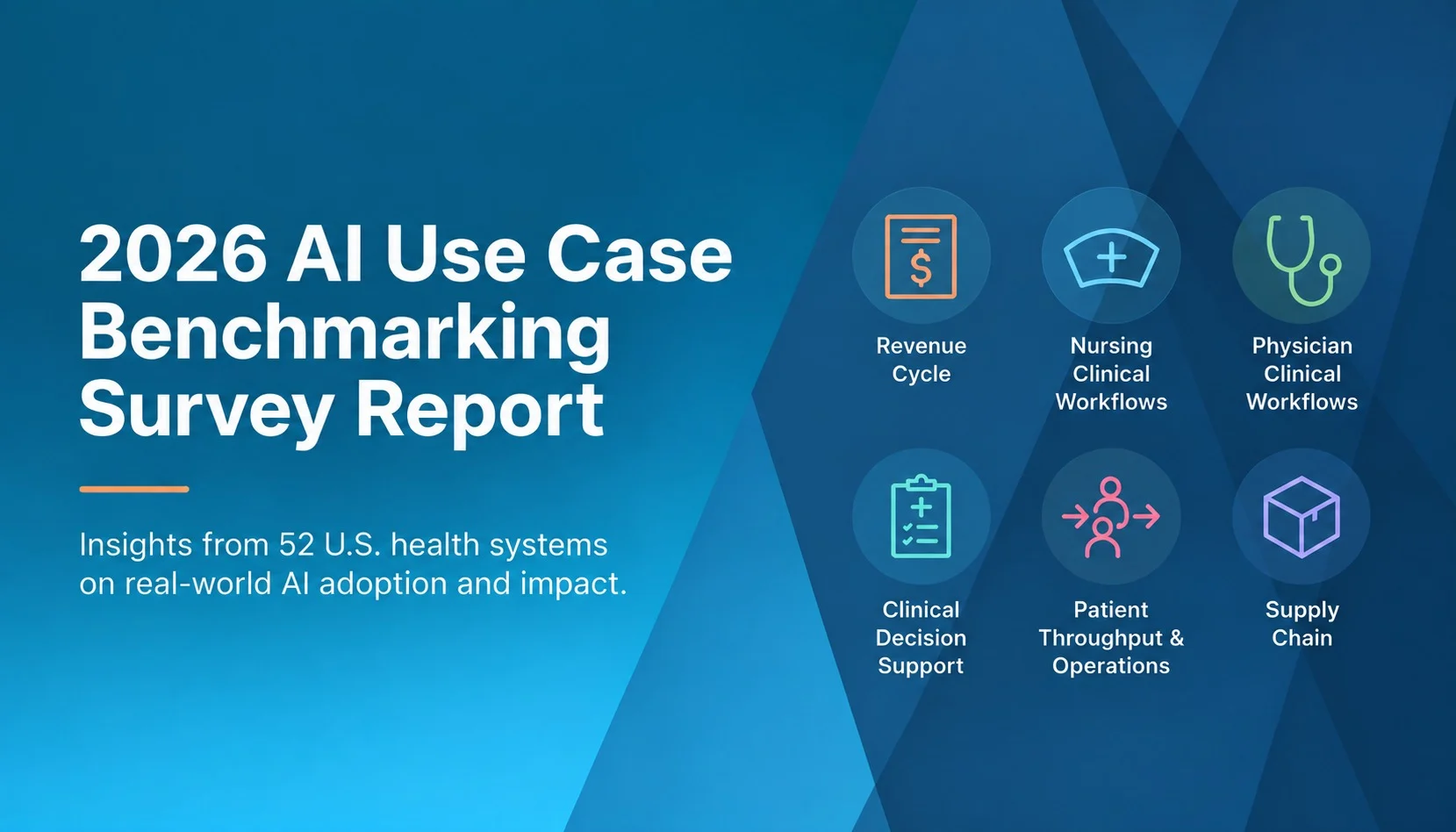
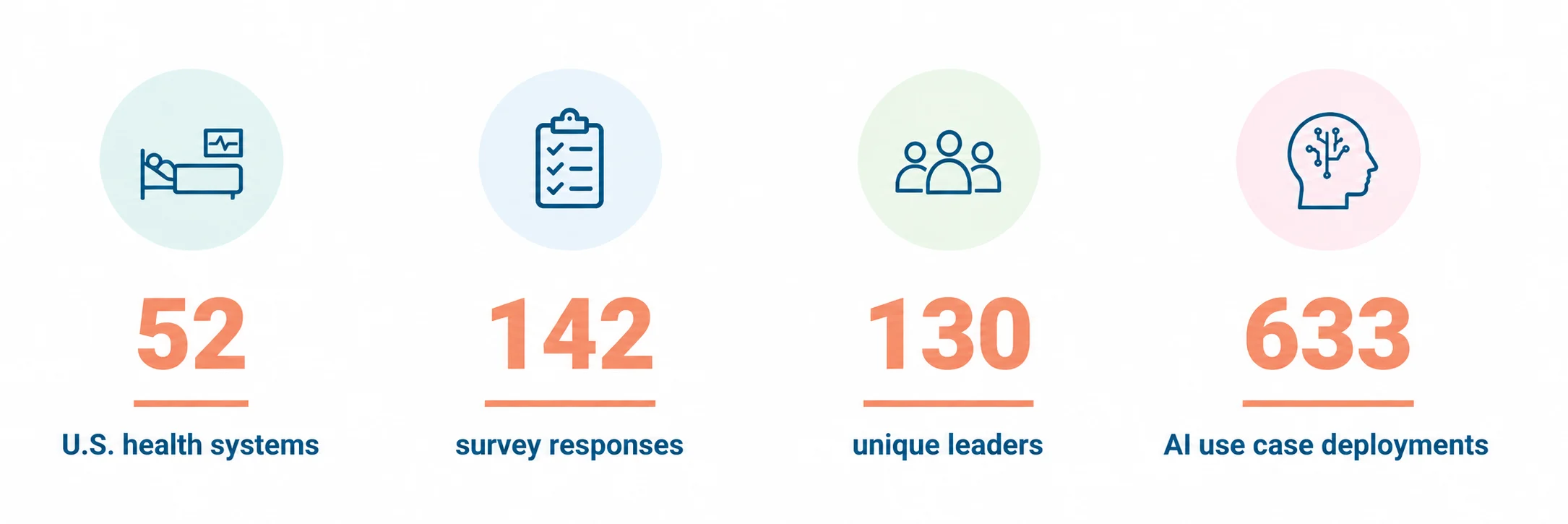
The 2026 AI Use Case Benchmarking Survey, conducted by The Health Management Academy’s (THMA) AI Catalyst and Strategy Catalyst research programs, examined six categories: revenue cycle, nursing clinical workflows, physician clinical workflows, patient throughput and operations, clinical decision support, and supply chain. The survey was distributed to senior leaders at 52 leading U.S. health systems. All respondents sit at the system-wide, director-level or above, with all having direct oversight over their specific survey category. The survey studied deployment status, service line and employment locations, time live, solution source, performance evaluation metrics, investment outlook, and top barriers to scaling artificial intelligence (AI) across all survey categories.
The survey was designed to address an existing healthcare intelligence gap by surfacing health system investment and adoption trends, areas of partnership, levels of success, and identification of meaningful outcomes and progress at the market level. The goal of the survey is to provide meaningful benchmarking statistics and actionable insights to support AI strategy and facilitate peer connection amongst THMA member organizations.