Executive Summary
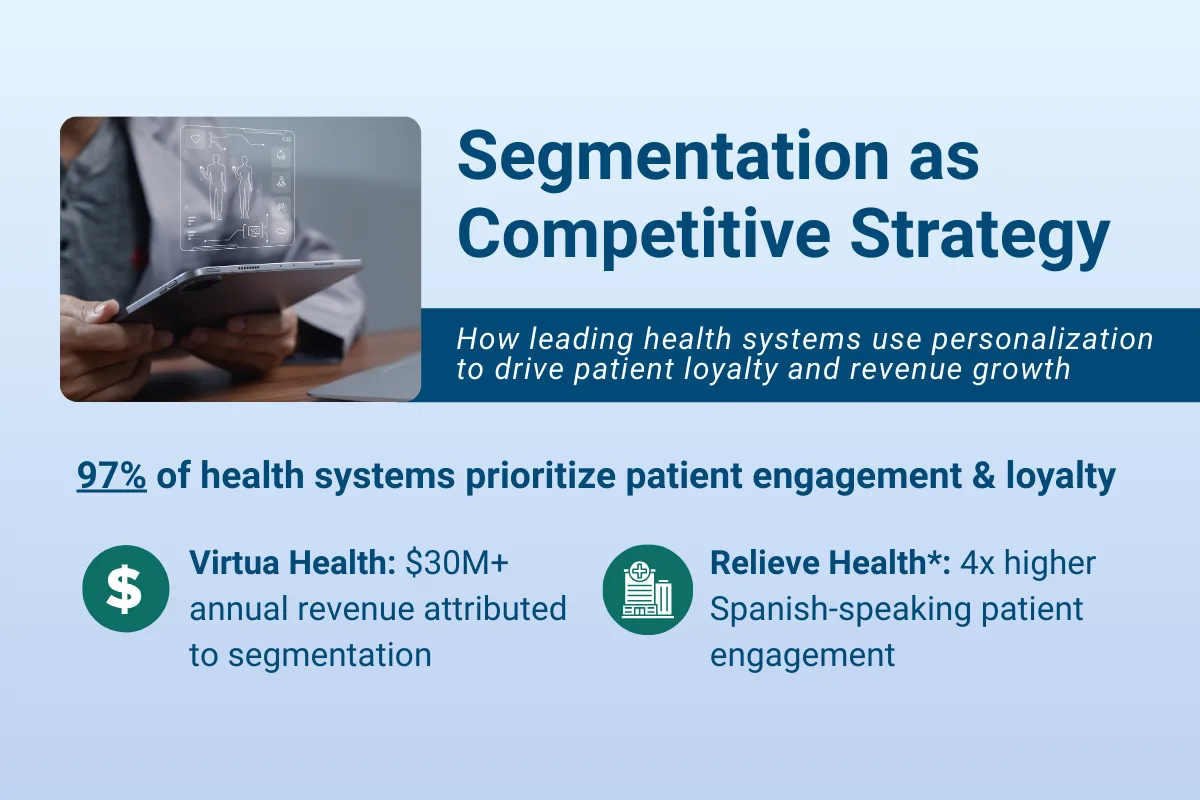
Health systems across the United States are adapting to the reality of increasingly diverse patient populations. Consumer segmentation—a marketing technique widely used in other industries—has emerged as a powerful approach for health systems to deliver more personalized care to distinct populations while maintaining operational efficiency.
Despite healthcare’s unique complexity, foundational segmentation principles can be applied to health systems. Just as other industries focus on customer lifetime value and purchasing behavior, healthcare must adapt these frameworks to account for patient heterogeneity, the complexity of health conditions, and social determinants that influence care-seeking behaviors.
To understand this in more detail, this publication includes:
I. Background: Benefits of behavioral and psychographic segmentation in healthcare
II. Action steps: Insights on how health systems can approach segmentation efforts
III. Case studies: Health system segmentation strategies and use cases
Consumer segmentation in healthcare is the systematic division of patient populations into meaningful groups or segments based on shared demographic, behavioral, and/or psychographic characteristics. Segmentation enables health systems to tailor engagement strategies and programs to distinct patient needs, moving away from a “one size fits all” approach. This results in enhanced care quality and consumer loyalty.