How Health System Leaders Evaluate Artificial Intelligence in Cardiology
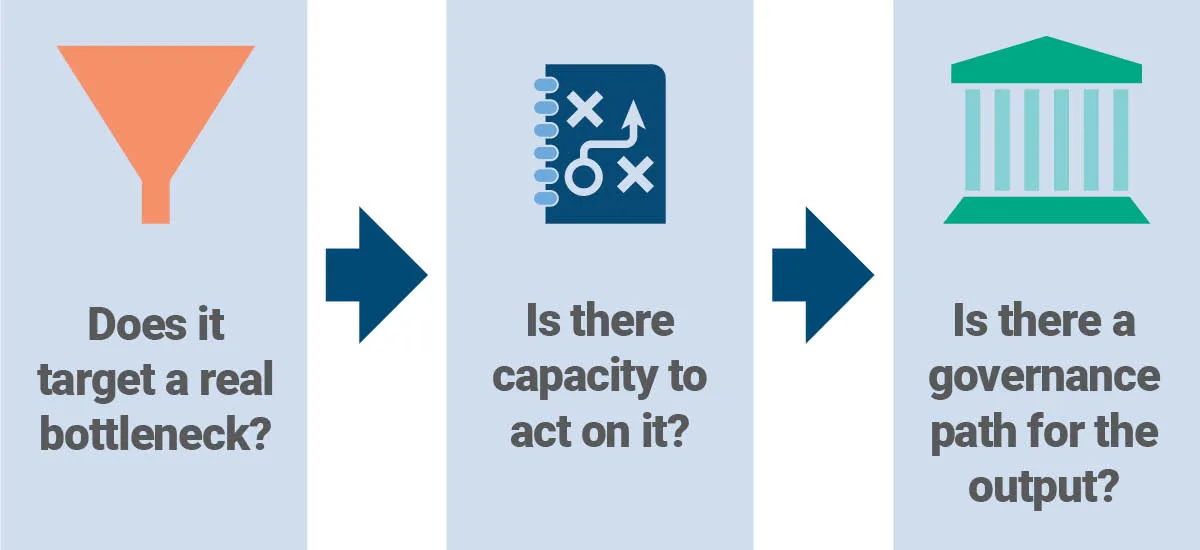
Health system leaders evaluate artificial intelligence in cardiology against three questions: does the tool target a real clinical or operational bottleneck, does the organization have the capacity to act on what it finds, and is there a governance path for the output before it ever reaches a patient. Model accuracy rarely tops that list.
For teams building a commercial case around cardiovascular AI, understanding this evaluation logic matters more than any performance benchmark.
The Bottleneck Test Comes Before the Feature List
Cardiovascular service line leaders increasingly describe their own role in terms of bottleneck management: finding where friction slows a patient’s path through diagnosis, treatment, and follow-up, then removing it at scale. That framing shapes how they evaluate every AI system industry brings to the table.
An AI solution that adds diagnostic capability to a workflow already running at capacity does not create value. It creates noise, and in clinical practice, noise erodes trust faster than a false positive does. The job of applying AI well, in one leader’s framing, is to solve problems clinicians already have, not invent new ones.
This logic came up repeatedly in a recent Cardiovascular Forum hosted by The Health Management Academy, where health system and industry leaders compared notes on AI deployment. One exchange centered on a population health tool that used AI to flag a large backlog of overdue referrals for review. The tool worked as designed, and it generated value only because the health system had open capacity to absorb the newly prioritized patients.
Leaders were candid that the same tool, aimed at an already fully booked specialty, would have produced a longer, more accurate list of patients nobody could see. The lesson generalizes well beyond that one example: before a health system asks whether an AI system is accurate, it asks whether the system is aimed at a bottleneck the organization can clear.
Where Cardiology AI Is Already Earning Trust
Despite that caution, cardiovascular medicine is one of the furthest along specialties in applying machine learning and deep learning to real clinical decisions, and health system leaders will say so directly. Deep learning algorithms trained on large amounts of electrocardiogram data can flag atrial fibrillation risk, structural heart disease such as hypertrophic cardiomyopathy, and reduced ejection fraction, often from a standard ECG or even a single-lead tracing, well before those conditions would surface through a standard workup.
AI-assisted ECG interpretation is proving useful precisely because it can pick up complex patterns, subtle shifts away from normal sinus rhythm, or an unusual ECG algorithm output that are easy for the human eye to miss. Cardiac imaging is following a similar path. AI is helping cardiologists extract more diagnostic signal from CT scans and other imaging studies, including incidental findings, such as an enlarging aorta, that are easy to lose in unstructured notes across a large health care system.
Digital health tools and continuous monitoring are extending that same logic into daily life. Patch monitors and consumer devices, including smartwatches such as the Apple Watch, can flag possible arrhythmias outside the hospital, streaming vital signs and rhythm data back into a health system’s clinical workflow rather than waiting for the patient’s next visit, though questions about patient consent and data ownership for that continuous stream are still being worked out.
Heart failure programs are applying similar predictive modeling to identify patients likely to decompensate, aiming to intervene before an emergency admission rather than after one. None of this is theoretical inside leading cardiovascular programs. It is operational, even if much of the published evidence behind it is still retrospective analysis rather than prospective validation, and ongoing efforts to close that gap are a recurring theme in health system AI strategy. Health system leaders now expect industry partners to speak fluently about where in this landscape their product sits.
The Last Three Feet: Why Implementation Outranks Accuracy
The gap health system leaders worry about most is not model performance. It is what happens in the last three feet between an AI-generated signal and a clinician acting on it. A now-familiar illustration surfaced at a recent Cardiovascular Forum: an AI-enabled ECG screening program flagged a patient as being at risk for atrial fibrillation. The patient was advised to start using a wearable monitor to track their heart rhythm. Months later, an in-office ECG confirmed the diagnosis, and only then did the patient mention that his monitor had captured the arrhythmia weeks earlier. Nobody had configured the alerts. The algorithm had done its job. The workflow around it had not, and the leader recounting the story was direct that the clinical benefit to that patient, in that moment, was effectively zero.
That story has become shorthand inside health system AI circles for a broader principle. General-purpose technology tends to improve quickly, but the harder, slower work is rewiring culture, staffing, and clinical workflow so people are actually positioned to act on what the technology produces. Successful integration depends on that workflow, not on the underlying algorithm.
Health system leaders raise a consistent set of limitations alongside the operational ones. AI models trained on unrepresentative data can perpetuate disparities across diverse patient populations, which is why rigorous validation across different patient groups, not just strong performance on a training set, is now a standing requirement before scale.
The “black box” nature of many deep learning models can undermine clinician trust, since a recommendation without a clear explanation is a hard sell to a cardiologist accountable for the outcome. Leaders are also candid that overreliance on AI risks dulling clinical judgment over time, and that AI still lacks the human judgment and emotional intelligence a difficult conversation with a patient or family requires. Accountability for AI-driven harm remains legally unresolved, which is part of why governance has become as important to health system leaders as performance.
Who Actually Decides: Service Lines, System Governance, and the Chief AI Officer
For teams building a go-to-market strategy, knowing who owns the decision matters as much as knowing the decision criteria. Health system leaders describe a fairly consistent pattern: AI tools with impact confined to a single clinical service line, such as cardiology-specific diagnostic support, tend to be evaluated and approved within that service line. Tools that touch multiple service lines, most notably generative AI for clinical documentation and anything built on shared data infrastructure, get escalated to system-level informatics and governance functions.
That governance layer is maturing quickly. A growing number of health systems have created a formal Chief AI Officer role, and dedicated AI governance committees are now reviewing what individual service lines bring forward, including how rigorously a proposed tool has been validated and how individual clinicians are using it. Two open questions are shaping that governance work in real time: an unsettled legal question about physician liability for patient data that sits, unacted-upon, in a data lake, and a firm operating boundary most health systems are drawing around autonomous AI in direct patient care. The consistent position among health system leaders is that a nurse or clinician stays in the loop for anything that changes a patient’s care, including a medication change or a referral, and that pure autonomous AI in that context remains premature. Leaders are also increasingly candid about a parallel risk: clinicians using AI tools on personal devices, outside any of this governance and oversight structure.
The ROI Patience Test
Health system leaders are recalibrating what counts as return on investment for cardiovascular AI, much as they are across AI's shift from strategic priority to competitive necessity more broadly, and pharma teams pitching a commercial case should recalibrate with them. Several leaders described early AI deployments, including patient-facing tools meant to improve medication adherence and after-hours communication, as intentionally net-negative in the short term. The value case in those early phases was framed around clinician hours saved rather than dollars recovered, with the expectation that harder financial ROI would follow once the tool proved itself and scaled. That patience has limits: leaders want a path to demonstrable, dollar-denominated value, and they are increasingly running structured pilots against a defined cost and capacity threshold before deciding whether to expand.
The build-versus-buy debate that surfaces in nearly every AI vendor conversation is, in practice, becoming a co-build question. Health system leaders are wary of the sheer number of point solutions entering cardiovascular AI and are consolidating around a smaller number of partners capable of covering more ground, while insisting on keeping clinical workflow ownership inside the health system. Industry partners who can operate inside that structure, contributing components without asking to own the workflow, are having an easier time getting to yes. The future direction most leaders point to is less about flashier models and more about prospective validation and clearer accountability, the groundwork that turns a promising pilot into a durable clinical application.
What This Means for Commercial Healthcare Teams
For organizations selling into this environment, three practical shifts follow.
First, lead with the bottleneck a cardiovascular program is trying to clear, not the sophistication of the underlying AI technology.
Second, expect the capacity conversation to come before the budget conversation: a health system will ask what happens to the patients an AI tool identifies before it asks what the tool costs.
Third, identify early whether an initiative belongs to a single cardiovascular service line or needs system-level governance sign-off, since that determines who sits on the buying committee and how long the sales cycle will realistically run.
Positioning cardiovascular AI as a governed, human-in-the-loop clinical decision support tool, rather than an autonomous system, matches where most health systems are willing to go today, and it is a more credible story for a commercial team to tell.
Where These Conversations Happen
These are exactly the dynamics that surface when cardiovascular service line leaders and industry executives are in the same room. The Health Management Academy’s Cardiovascular Forum brings the two groups together in a private, peer-level setting built for candid exchange, giving industry leaders a direct read on how health systems are evaluating, governing, and scaling AI in cardiology.