On July 31, the Centers for Medicare and Medicaid Services (CMS) released the final rule for the Fiscal Year (FY) 2027 Inpatient Prospective Payment System (IPPS). These updates will go into effect on October 1, 2026.
Make sure you're logged in to access the resource below and download the pdf.
What's Inside
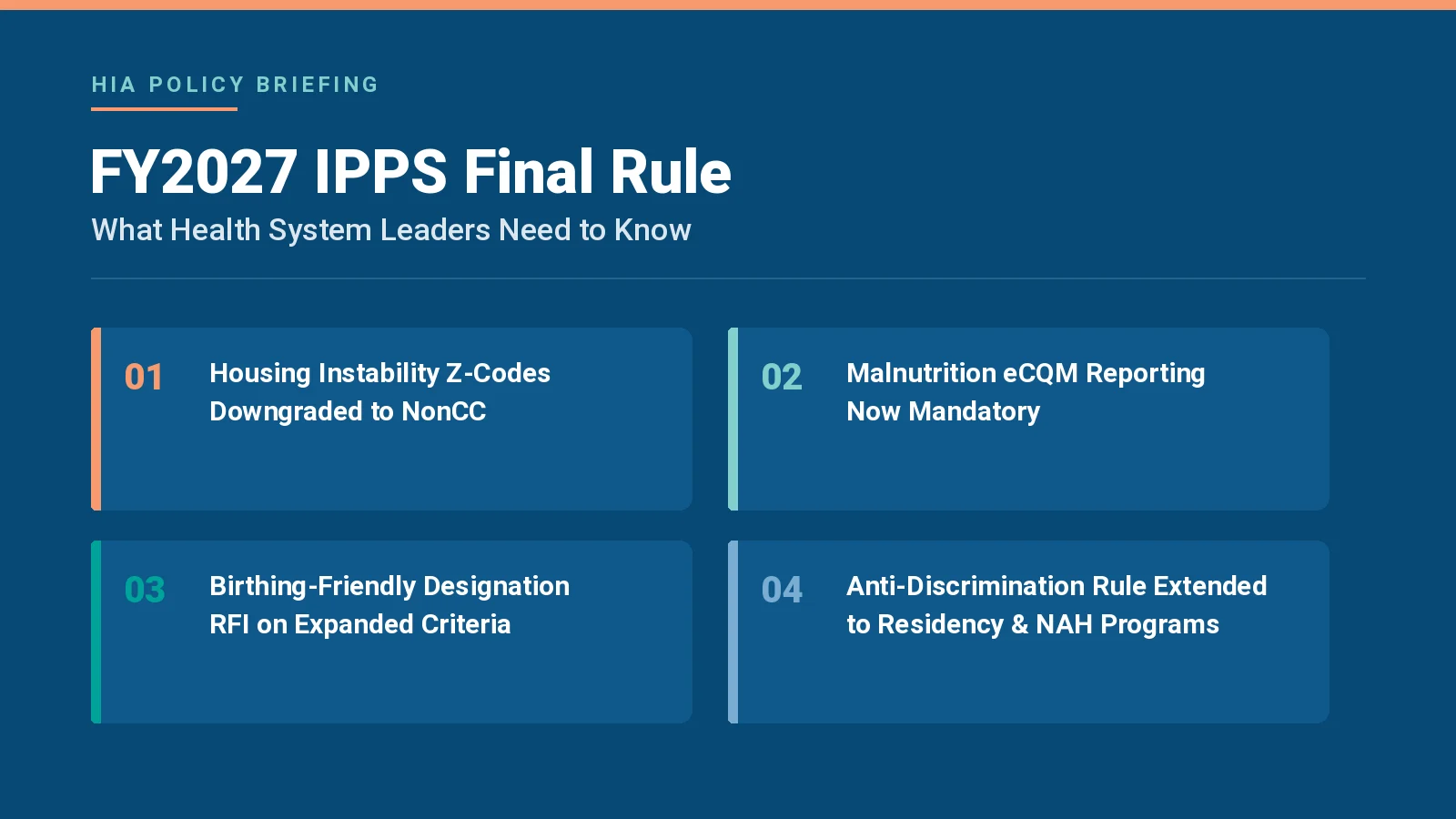
Non-Complication or Comorbidity Designation for Housing Instability Z-Codes: CMS previously upgraded the severity levels for several Z-Codes describing homelessness, inadequate housing, or housing instability from NonCC to CC. The agency finalized its proposal to downgrade the severity level designation for 10 related Z-Codes from CC to NonCC starting FY27.
Mandatory Malnutrition Quality Measure Reporting: Health systems will now be required to report the Malnutrition Care Score electronic clinical quality measure (eCQM) beginning with the Calendar Year (CY2028) reporting period/FY 2030 payment determination.
Request for Information (RFI) Expanding Birthing-Friendly Hospital Designation Criteria: CMS sought input on the inclusion of the Cesarean Birth eCQM and Severe Obstetric Complications eCQM, as well as a modified scoring methodology and tiered award approach for the expanded designation.
Prohibiting "Unlawful Discrimination" in Medical Residency Programs: Building on CMS's previously finalized policy that applies medical accrediting bodies, this policy applies to "approved medical residency training programs" receiving direct Graduate Medical Education (GME)/Indirect Medical Education (IME) payments