Research Overview
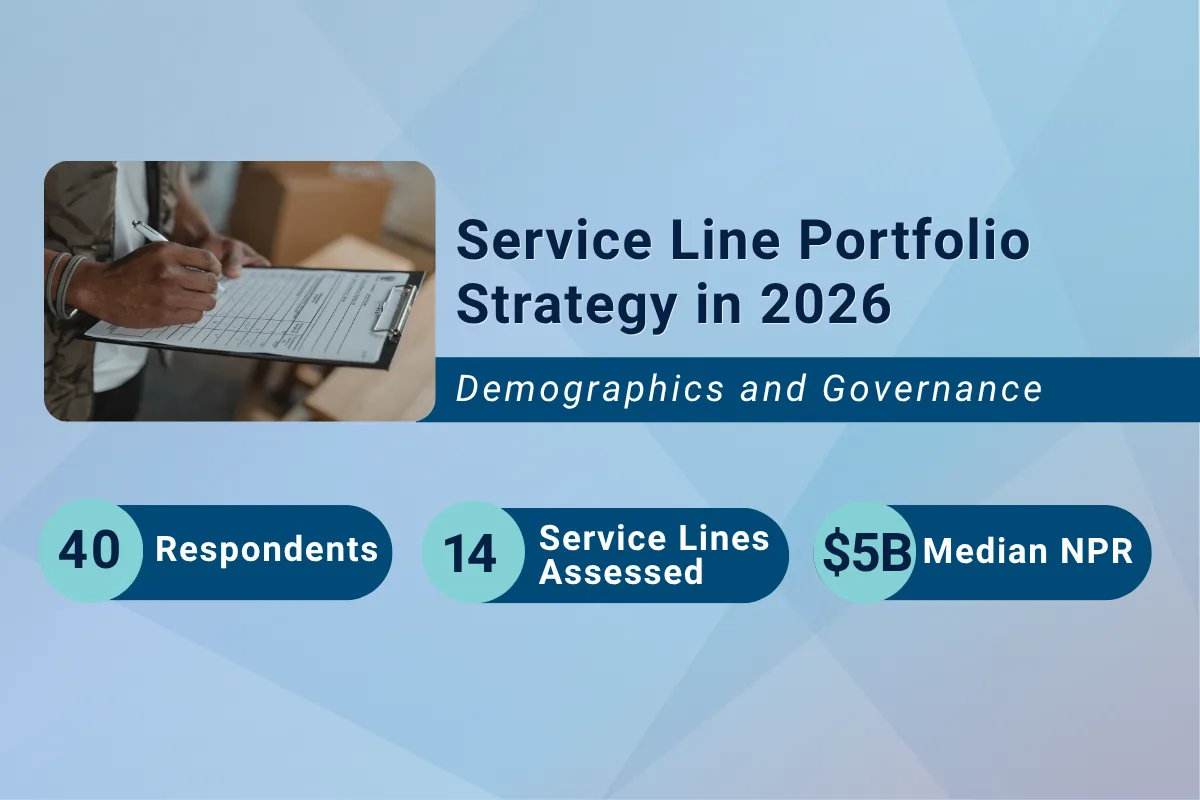
In early 2026, Strategy Catalyst surveyed 40 CSOs, COOs, EVPs/VPs of Strategy and Operations, and service line executives at U.S. health systems with more than $500M in net patient revenue ($5B median). The survey explored which service lines are sustained as core pillars for strategic or mission-critical reasons, the factors shaping portfolio decisions, and how service line strategy is evolving in practice. The findings are organized around three paradoxes—patterns where what systems say, what they do, and what they have experienced diverge in ways consequential for portfolio strategy.
Preview of the Three Paradoxes
1. The Valuation Paradox: Stated values are balanced; decision drivers are not
Leaders say mission, quality, and margin matter equally; financial signals are what drive service line decisions in practice.
Mission-anchored lines are losing ground financially, but no surveyed system has exited one in two years.
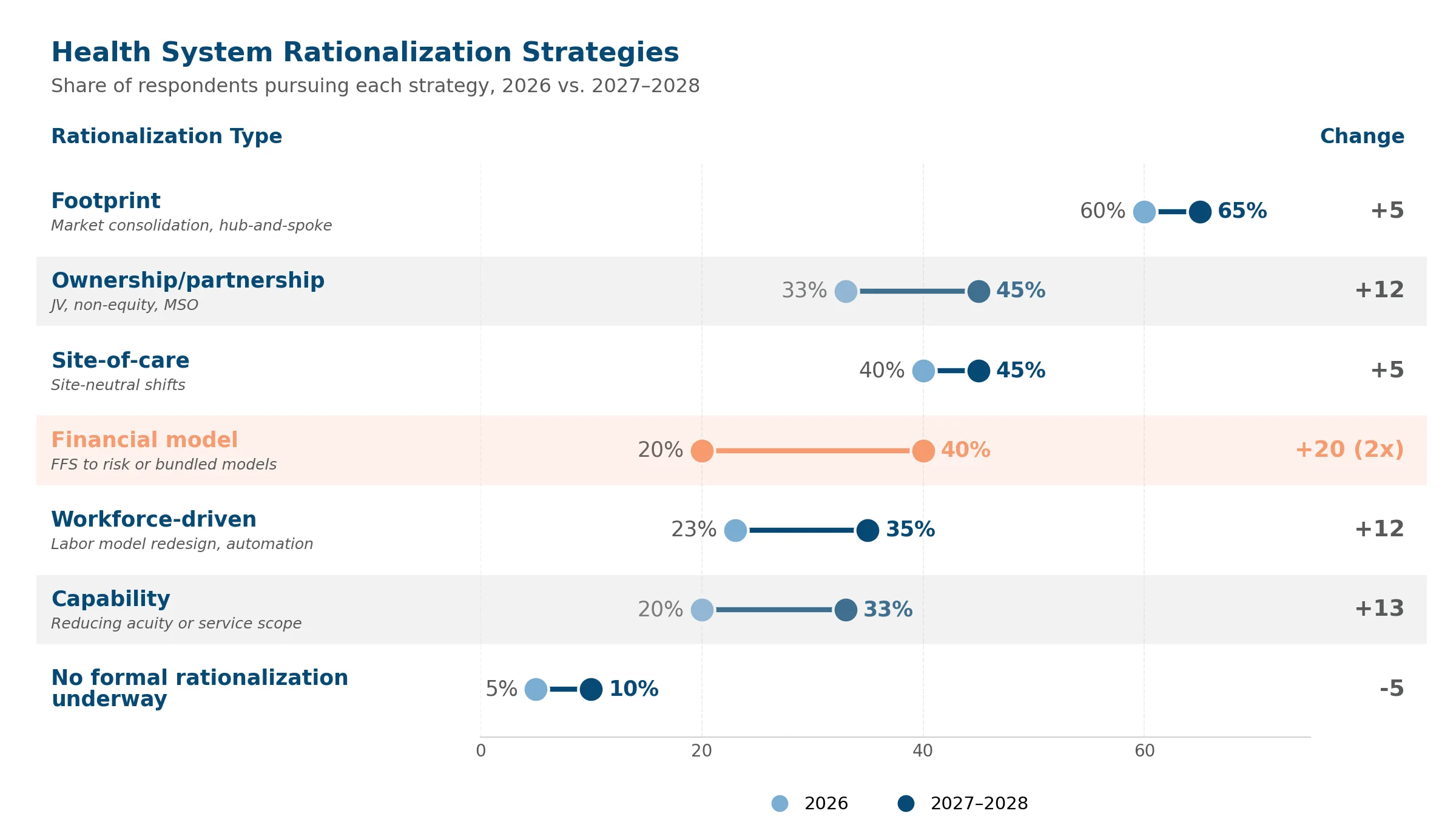
2. The Rationalization Paradox: 90% are rationalizing; few control the key constraint
For many systems, rationalization, optimization, and growth are interrelated, as the decision to stop doing something in one place is often intertwined with the decision to grow somewhere else.
Nearly every system is rationalizing (90%), but the leaders who set the agenda rarely control the constraint most likely to stall execution: physician alignment.
3. The Ambulatory Paradox: Aligned on the destination, late to leave
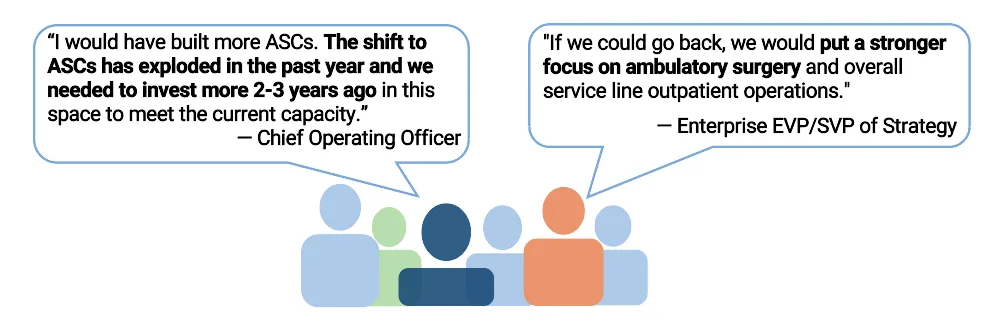
Systems are prioritizing ambulatory expansion for the lines leaders see as most exposed, but site-of-care shifts aren't yet following. Intent is outrunning action. Moreover, being late to the ambulatory transition was the top regret from the past 2-3 years.


Discussion Starters
How does your system balance community commitments and mission obligations with financial factors when making service line decisions?
How does your organization approach physician alignment and stakeholder engagement whenpursuing service line changes?
Looking back over the past few years, where do you wish your organization had moved sooneror invested differently?
Where are the biggest opportunities and tradeoffs in your ambulatory and site-of-care strategyover the next few years?
How well-aligned are system, regional, and hospital priorities when it comes to service linestrategy?
Upcoming Events
Strategy Catalyst Webinar: Where the Field Drew the Line: A 2026 Survey on Service Line Strategy
Register here | July 12, 2026 12pm-1pm ET
A readout of original survey findings on how health systems are reshaping their service line portfolios under financial and operational pressure. You will also hear from member co-presenters who will share how they are balancing growth opportunities, competitive pressures, and mission-driven priorities across their service lines. Recommended for: CSOs, CFOs, COOs, Service Line Leaders, and Corporate Strategy and Planning Directors.