This week’s featured graphic comes from a new study in JAMA that uses Epic data to track the surge in patient-provider messages since the COVID-19 pandemic. The headline finding is that patient-authored messages to providers have surged by 153%, but that increase was not accompanied by a decrease in telehealth or office visits:
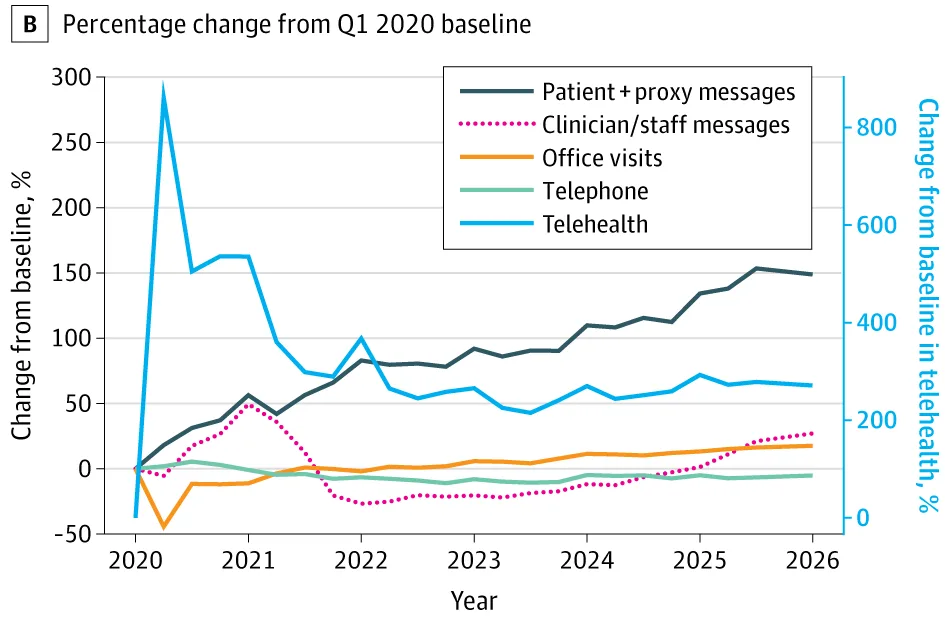
The authors argue that these trends suggest that patient messaging serves as an expansion of between-visit care rather than a substitute for in-person care. They also say that the gradual and steady increase in patient messaging suggests the increase will be persistent.
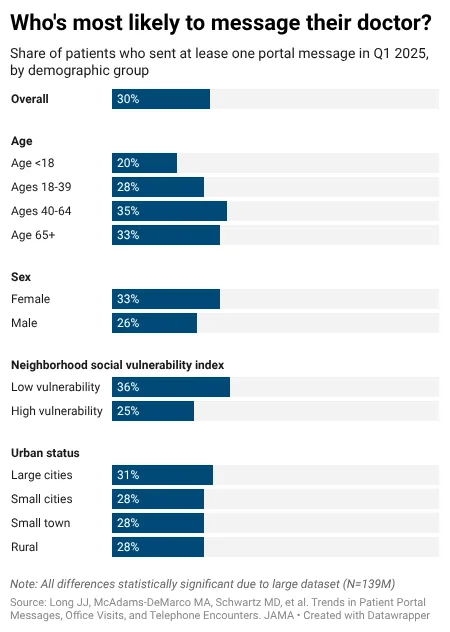
The authors also measured the share of patients that authored messages within various demographic groups. Female patients, patients between the ages of 40 to 64, and patients in affluent neighborhoods were the most likely to send messages to providers:
This trend imposes real costs on health systems: according to the AMA, inbox overload has become one of the leading drivers of physician burnout, with many physicians spending up to two hours a night clearing the in-basket on their own time. Physician burnout is conservatively estimated to cost health systems more than $5 billion a year.