In this episode of The Strategy Catalyst Dispatch, we unpack why expanding a physician workforce alone can't fully resolve access challenges and how Inova Health System has targeted the problem through a coordinated access-and-flow strategy.
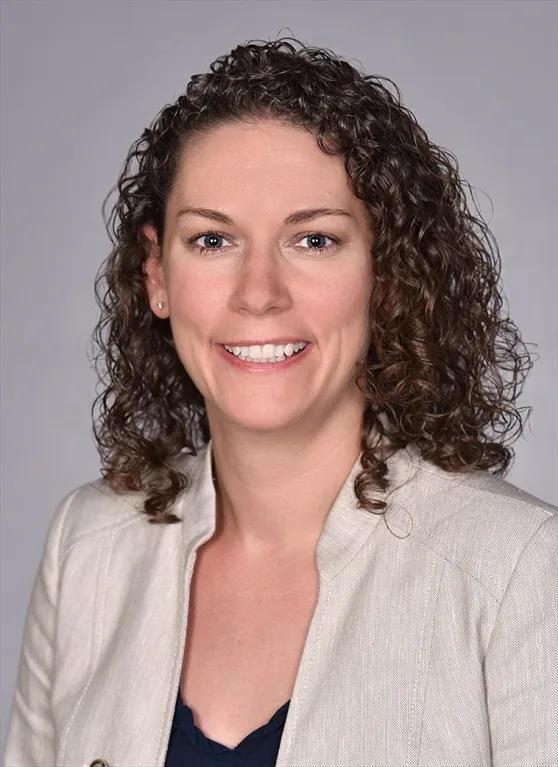
Michelle Vassallo, VP of Operations, Clinical Enterprise, walks us through the systemwide standards, centralized infrastructure, and unified referral and transfer processes that allow Inova to unlock “virtual capacity” and move patients to the right place, at the right time, with the right resources. Listen to the episode by clicking one of the links below.
Full transcript
Anika Rasheed: Welcome to the Strategy Catalyst Dispatch, a podcast from the Strategy Catalyst team at the Health Management Academy. I'm your host, Anika Rasheed, Senior Analyst, and each episode we'll delve into the trends and insights shaping healthcare strategy today. Let's dive in.
Access is one of those perennial challenges in healthcare. Every system is trying to get it right. Provider shortages, scheduling bottlenecks and rising patient expectations make it harder than ever to deliver timely care. And yet expanding your physician base is challenging and rarely alone solves the problem.
At Strategy Catalyst, we've been spending the last several weeks on research into access as a strategic product. The idea that patient access isn't just an operational issue, but a strategic differentiator that health systems really need to compete on. Through that work, we've seen some really impressive examples of systems rethinking access as a system-wide capability and without adding more providers, but building that infrastructure to make every clinical minute count.
One organization that stood out in that research was in Nova Health System. Their work in redesigning patient flow referral pathways and centralized contact center innovation shows what it looks like to treat access as an enterprise strategy and this seamless continuum of work rather than a department project.
So to unpack that story, I'm joined today by Michelle Vassallo, Vice President of Operations in the clinical enterprise at Inova.
Michelle and I actually connected a few weeks ago to build Inova's written case study, and that conversation revealed some really fascinating lessons from why when Inova doubled their employed physician base, it didn't necessarily improve access the way they expected, and they had to work backwards a little bit to how they've built virtual capacity through standards and coordination, referral integration and self-service access methods.
So in this episode we'll dig into how Inova built the infrastructure behind access through their Transfer Center Unified Referral Backbone and contact center that now move patients more efficiently across what they call access and flow and what results they've seen so far. So let's get into that conversation.
Anika Rasheed: Thanks for joining us today, Michelle.
Michelle Vassallo: Thanks so much for having me.
Anika Rasheed: So today what we're gonna talk about is, in Inova's experience with why hiring more doctors doesn't necessarily fix, all of your access issues. Michelle, in our last conversation you mentioned that you'd rapidly doubled your employed physician base yet wait times didn't necessarily improve there. Could you talk us through what was happening there and what kind of made you realize that just hiring more wasn't the answer? what were some of the hidden inefficiencies?
Michelle Vassallo: So I think the rapid, acquisition in our physician practice area was really driven by, consumer demand, market demand, market growth, and recovering from COVID. You really had a sense of what the backlog and market demand was for, for physicians. and so in many, many areas of access and healthcare, you can't hire your way out of the problems. or not being able to see every single patient. 'cause that's really the, the issue in healthcare is how do we get the right patient to the right place at the right time and the right resources. one of the big pieces of our, our strategy is looking at. The whole care model. once you sort of have a, a critical mass of physicians where at some point you need to take a pause and reevaluate the operations, then you need to start looking into the other pieces of the puzzle and looking at creating that virtual capacity that's hidden within. So there are things like, You have your subspecialist and your specialist really seeing the types of acuity that they should be seeing. Do you have your proceduralist and your surgeons only seeing patients that are ultimately going to need, you know, surgeries or procedures in most of the cases? So we've done a lot of things to really get, again, the right patient to the right clinical match, as well as working through general things like position a PP, productivity. Clear rules and responsibilities in the care of the patients. When you ask about, you know, when do you realize you can't hire your way out of an issue? There's a cap at which you can even recruit of certain specialties and whatnot. So there, there will always be some fundamental and unchangeable limits to specifically physician specialty coverage.
But when we're thinking about that virtual capacity, so, you know, you can't get more office space at a reasonable price, or there is not office space that makes, logistical, strategic or, you know, aligned, aligned sense, then you have to start looking into what is happening where we don't have, you know, sort of maximum productivity.
And I don't mean that in the or apps working hard or seeing patients, but I mean that in some of the pieces that you alluded to, you have to look at scheduling balances. You have to look at, you know, virtual care balances. That's a hot topic right now with the, you know, current negotiations, the government shutdown.
But if you have. Physicians or apps who have to use an exam room to do virtual visits. Well, is that a great use of that space? Probably not. If you have another a PP or physician that could use that exam space to see a patient, right? And then you're using office space the correct way. Seeing again, the right patient in the right space with the right resources. So looking at schedule balancing, you can't have a Tuesday, Wednesday, Thursday, jam packed and then have. Physicians or apps who are partial FTEs only working those days. you can't have clinics closing early on every Friday.
you really have to maximize and have organizational goals and a strategy to ensure that you've got standard hours of operation, that you have standard coverage for those hours that you are maximizing. Again, the space, specifically if you're doing any sort of hoteling or office sharing, that you've got gaps filled. With those hoteling providers and or you have the maximum alignment with patients that you have in your, your office and that you're using, you know, strategies again,
so really looking at, again, organizational requirements for productivity, organizational requirements and goals for clinic room utilization, making sure that we've got those filled, before we are adding more, really maximizing what you have.
Anika Rasheed: so like if you can't hire your way out of your access problems, it sounds like the alternative approach is what you said before, maximizing virtual capacity.
And I feel like there was probably a culture challenge there. So how do you get, you know, acquired independent practices or you know, longer tenured physicians to kind of adopt those new standards around scheduling productivity, how long they're spending with patients? Talk me through that process and kinda what roles did leadership or service line leadership play in driving that.
Michelle Vassallo: one of the best things to help us organize our work was the fact that you have to have the technological backbone and logic. To be able to make many of these things work, whether thinking about centralization, central monitoring, or self-service, you have to have an agreed upon set of standards, otherwise that it's legitimately a, you know, a, a software puzzle piece.
They won't, the pieces won't fit together. within each service line, we have a triad leadership. We have a physician leader, a nurse leader, and an administrative leader. those three teams are responsible for the clinical care. They're responsible for the, best evidence, new standards. And then we have an ambulatory triad that partners with those groups who manages the ambulatory practices. the service lines are responsible for the care that's administered, and the ambulatory leadership is responsible for the efficiency in those clinics and the running of those clinics. And so we have a partnership between those groups to ensure that we have, Those agreed upon standards, which makes sense to do by specialty.
As an example, a physician in primary care cannot have the same contact hours. As a physician who does procedures 50% of the time the math doesn't math. Then you get frustration among the providers. Then you get distrust of the data. So it makes sense to look at kind of a combination of, you know, the RVU model, but also the contact hours.
And contact hours are the time you spend with patients, right? So. Again, primary care or a general ambulatory setting that is not doing interventions, it's, it's much easier to, measure because you're really looking at scheduled appointments per day and that cumulative amount of time. So there are a couple things that have gone into that.
our service line physicians, really led by our. It's very strong guidance. We have a clinical triad that runs the clinical enterprise. That's our, in effect, our, chief physician officer, chief operating Officer, and chief nursing officer, partnered by a strong physician leader in our, CEO and President Dr.
Jones, to set a vision of this. our goal in Northern Virginia is to take care of our community and we can't take care of our community if we're getting in our own way with some of these, you know. Inefficiencies that are not even meant to be inefficiencies. A lot of the things that we discovered along the way just of the creation that we built things in our EMRA long time ago, and to your point, we've acquired practices along the way and there may not have been a standard when we brought them on. So we've had to do a lot of cleanup work, which really leads to alignment because you have people talking about, okay, well I see a post-hospital discharge patient in 30 minutes. Well, I see it in 15 minutes. Well, what should our standard be? So then working with the clinical teams and then working with the operations teams to determine what those standards are helps you then to set up what the capacity in those clinics really are, what the capacity for that particular physician or specialty group really is. And then looking at the balance of what should our new patient growth look like in those departments? What should our follow up or our, procedural volume? All of those things tie together for you to figure out a cohesive strategy because At some point, either your acute hospital is going to service your ambulatory patients, right?
Whether they come in for an unplanned, episode of care, er, surgical whatever, or admission, or whether it's for an elective, and then the care feed. Back to primary care and feed specialty follow up. So it really is a circle where you have to make a direct connection. We've done that recently with our referral backbone strategy to ensure that we've got the same logic that referring providers are able to, include.
We've got the same underlying, pieces of our EMR, those pieces of the puzzle so that if it's a referral from urgent care or referral from an ER or a referral from. Post-hospitalization, that it still fits all in the right pieces and gets the right patient to the right subgroup of providers or the right patient to the right slot on the schedule, or makes our centralized scheduling or the front desk as an example of front desk scheduler. It makes their job a lot easier because the information they need, and again, working through that with our physicians, clinicians, and operations teams, the information they need to make a quick scheduling process, able to be done. Is there, So there's, there's a lot of pieces with that.
Anika Rasheed: Okay, so you made sure to include both clinical and operations leadership in the conversation of setting standards. And then also important was organizing that technological backbone to make the logic and agreed upon standards, super clear and simple. And then that was all. Backed up by this strong message from leadership that your goal really needs to be getting all patients the care that they deserve, to align on what capacity truly is and what standards should be.
And then, and then it sounds like this all feeds into this nice loop with referrals and moving from care setting to care setting. And even just scheduling it makes all of that easier. So yeah, so definitely lots of pieces there when it comes to access and flow. In our last conversation, you also shared a great example about what you call the two beds problem.
Can you walk through that story and how it connects back to this broader access and flow framework and how that kind of plays into the access issues when you're hiring more providers and you know, you have to get at these kind of underlying foundational cracks.
Michelle Vassallo: everyone thinks about inpatient access as a either a gateway to your system and or. A portion of access, we call our program sort of access and flow. We think of flow more of the inpatient, acute setting and, and access is more of the ambulatory setting. But in the acute care setting, we think of the worst thing that can happen is we have one patient taking up two beds at a time.
So if you have a patient in an ER bay who has a bed assigned in an inpatient unit and it's taking three hours to get them upstairs. You've essentially wasted three hours of bedtime, whether it's for the next patient in the er, well, it would be only for the next patient, sort of waiting in the er, waiting room. if we have someone who's in an ICU that's ready to step down and they've had a step down bed assigned for a few hours, then you're just delaying or back logging whether it's a transfer into your system, which is excellent growth most often for people or patients waiting to see a subspecialist if you're a quaternary care center. so that really delays the continuity of care and it's a very inefficient. Way to move people through your system. So ensuring that you've got the ability to actually monitor these things in real time. The ability to have ownership at your care site or your clinic of when these things are not in compliance with our organizational goals and a strategy around, how does, how do you have a team that focuses on this?
And we've gone to a lot of. Centralization or centralized of these different things to be able to be as efficient as possible in, on the hospital side, the acute side, reducing some of these inefficiencies, and then on the ambulatory side, working on maximizing those efficiencies.
Anika Rasheed: Yeah, so solving the two beds problem like you're describing and making sure you never have one patient occupying two beds in those sort of liminal care moments is one example that illustrates the larger access and flow goal. And it's about. incorporating those pieces of centralization and visibility into all of your processes and what patient is where and who needs what, and how that streamlines and reduces inefficiencies.
So what I'm hearing is you can maybe have the slickest front door scheduling, but if we don't address that throughput, then it doesn't. It doesn't have as much impact for access. You're still gonna have long wait times. There's still gonna be barriers in that patient continuity care journey there.
Michelle Vassallo: We can, we can have the, the easiest click through scheduling or we can have the. Easiest to remember phone number. But if you call us and we can't do the thing that you need us to do and the time you need it done, then it is sort of all for Naugh. So again, being able to act on what the order is for the patient or being able to act on the referral, or being able to act on the admission is the primary focus.
And so you have to clean all the downstream up to make room for that upfront. So on the inpatient side, again, it's shorter wait times for. Admission bed or an ER waiting room. And then on the ambulatory side, you're really thinking about reduction in lead times and or, potentially seeing, you know, subspecialists or, or surgical or interventionalists seeing patients that are not, you know, don't meet the needs for that, that intervention or that surgery.
Anika Rasheed: That makes a lot of sense. And to your point, you can't fix the front end without cleaning up the downstream flow. I think this is where your transfer center and the centralized bed placement team and the unified referral backbone come in as part of your access and flow continuum at a very high level.
can you just walk us throughhow those function together
Michelle Vassallo: Yeah, definitely. So our centralized contact center, we schedule for over 30 specialties in the organization. We include pediatrics, behavioral health. Those are usually populations that are not typically included, and so we've been very. Particular and purposeful in including those specialties, both in our contact center, in our transfer center, centralized bed placement, and the referral strategy. So when we think about the centralized contact center, a big piece of it is, again, having those standards in place so that we have guidance for our schedulers so that we have guidance for patients who are self-referred. So we have guidance for, Guidance from the clinics of how to, you know, make space when there isn't space as an example and or what to escalate and when to escalate it. We have, A very engaged group. We've got about 300 team members that are all remote. they have taken 2.4 million calls already this year. we have a digital assistant that is, machine learning model that, answers every call and then it works to smart route those calls. So if someone says they need to schedule an appointment, it can go to the right scheduler and or if it's a service line that has self-scheduling available through our digital assistant, it can go through a completely agentic process to get that
We try and mimic the ability to do things in our EMRs portal, self-service. We're trying to mimic that in our phone system as well. 'cause oftentimes people are just calling in because they either. You know, haven't tried that, that methodology or, you know, they're not aware that that is an offering that we have for self-service.
So trying to get anything that we can, self-service or smart routed, at the, at the helm there. Get that done first, and then get patients to the right agent who can help assist. With whatever the patient needs
Anika Rasheed: Just to recap, with the contact center, you're completely centralized and you've set those standards for each human agent so they know exactly what to do, when to escalate, and you also have agentic AI to answer every call and lift the burden of some of those basic appointment management calls, which can be managed by the ai.
But again, it can also escalate when necessary. But the goal is to really bring that self-service you have in your online scheduling to the phone experience.
Michelle Vassallo: . transfer center is a 24 7 team that sits directly next to our bed placement team. We have a, uh, high reliability operations center.
It's a clinical and logistical team that, sits in one of our campuses and they work to really monitor and, logistic size all of our, campuses. So our transfer center works on level loading. Acute care admissions. They work on getting patients transferred in from other care sites, other health systems and even international transfers.
We get a decent amount of those requests for repatriation back to the United States. We're right outside of Dulles Airport, which is an international airport. So, we do get cases that a lot of other health systems wouldn't necessarily get if they weren't near an international airport. And those teams really work to balance the load within our systems that we don't have, you know, patients waiting hours and hours in an ER for a bed at one location when there is a bed that meets that patient's needs.
Right? So matching the right patient with the right resources at the right time and place, we can get those patients from our quaternary care center. Who don't need quaternary care admitted to one of our community hospitals. We are very lucky in that we are geographically co-located our, our five hospital system. so we have the ability to move patients around, you know, a as it makes sense and as we're able to do to load balance and so that we don't have inefficiencies or delays in care. 'cause that's, that's where you start to see that degradation of, of, patient care quality.
Anika Rasheed: So I wanna zoom in more on the transfer center model. what makes your transfer center so different and innovative?
Michelle Vassallo: we do. A nearly electronic only request. allows physicians who are doing this work to be asynchronous and not waiting for the next person in the process to be available to have that conversation. Everything is within Epic where we do our work so all the teammates can see what is happening with patients when it's happening. We have a physician in the transfer center who helps to accept to the system for external transfers, which is a great satisfier for those referring health systems. And then we have the unique ability internally, like I said, to level load and make sure that we have. The right resources for the right patients.
And we are not inadvertently overloading one care site where we, could definitely take that patient and get them their next level of care, their next test, or you know, the next, treatment in a quicker time than waiting at the care site they're currently in.
Anika Rasheed: Yeah. It seems like that level loading approach is particularly a differentiator. Could you tell us about some of the outcomes that you've seen with your transfer center and the centralized bed planning team?
Michelle Vassallo: So with the transfer center and the centralized bed placement teams, we have had sustained outcomes, over the past few years. This has all been, within the last three years or two years, these have been built and gone live. So we've had a 12% increase in total admissions. And again, that's by level loading. Use every bed, that we can across our system. We've had a 40 minute reduction of the bed request to bed assigned, to a 2.6 million minute elimination of boarding time. And what that means is that we can see 39 more ed visits per day without building an additional er. That's without hiring additional staff, without hiring additional physicians. and so. those are the kinds of things you talk about building virtual capacity. You're not building more, you're not hiring more, but how can you have teams that are dedicated to these repetitive tasks and get very good at information collection, coordination of care, and are able to get the patient to the next level or the next point in their journey. So those have been some great outcomes. We've had a 20% reduction in border hours overall, and we have a, transportation automation software, and that has saved more than 9,000 hours, just by automating, and that's direct bedside caregiver staff time that they're not having to make phone calls in our transfer center for our level loading, specifically transferring patients out of our quaternary care center to our community hospitals. Back in 2023 before we really started this process, the Fairfax Hospital, which is our main campus, only accounted for 11% of all the patients transferred in our system, and now they account for 30%.
So we have had a huge increase in patients transferred to our other facilities, which also helps again with keeping units full. And, We are able to have predictable volumes at our other campuses, which helps with staffing, retention, it helps with productivity, helps with
Anika Rasheed: Yeah, that's great.
Michelle Vassallo: at those locations, so giving you a sense of predictable volume allows a hospital to function much more efficiently than when they're really trying to deal with these variable volumes.
Anika Rasheed: those are some really amazing results and it really shows you how impactful the power of coordination is with the 40 minute reduction in time from bed request to bed, assigned the 39 more ED visits per day without another er, and broad reduction in boarding time.
I know another piece of this puzzle is your unified referral backbone. Tell us how you are closing the loop from inpatient urgent care to specialty follow up. Can you tell us a little bit more about how that works and, and do I remember from our last conversation that the schedulers proactively reach out to the patients versus the other way around?
Michelle Vassallo: So for the backbone, the referral backbone, so our urgent care emergency department, inpatient primary care, and specialty to specialty, they all use the same referral order
backbone. So any of those referrals that are made from the er, urgent care, or inpatient to ambulatory that are marked as urgent, the call center, the contact center, those pa, those team members call those patients from the previous 24 hours.
That's the first order of business. They call those patients proactively and say you have an urgent referral from. The emergency department to orthopedics, let's go ahead and get you scheduled. That does a couple things. It's great customer service, right? These are patients who need an urgent referral. It also builds confidence in the process from the referring physician.
So they keep doing it. Again, it's like a self-fulfilling,work product. They get a message back in their in basket that the patient was scheduled, and then we can. We can decrease the amount of calls into the contact center because we're proactively calling the patient to do the thing that needs to be done. So it's, great on multiple levels, and it helps all of these work processes be more efficient and it's a really great, customer service patient satisfy our patient quality patient safety initiative. unified referral backbone process, specifically our ER and urgent care referrals to our specialists. we have a 14 day fewer lead time for those patients, than our all referral pool. And again, that's through the ability to differentiate, routine and urgent that, proactive outreach, and the, increase. referrals placed by our ED to our internal providers has increased 725% since December of 2023.
Anika Rasheed: Wow. could you tell me kind of what enables the unified backbone and like in terms of the technology stack. Is that a custom build vendor solution? Is it all integrated with Epic?
Michelle Vassallo: Yep. This is all through Epic. So it's using a specific referral pathway, and it's essentially having the agreed upon subgroups at the very end. So if we work backwards, there's groups of physicians and apps that see certain diagnoses or certain conditions within each specialty. So you start with that and you build a series of questions backwards. To ensure that you get the patient through that series to that right subgroup of patients, or excuse me, that right subgroup of physicians and apps. And so we
Anika Rasheed: Okay.
Michelle Vassallo: same referral order regardless of which physician group is referring. Meaning some of it can come from our non-employed affiliated groups who are using EpicCare link. Or community connect, our er, urgent care, ambulatory to each other, primary care or post-hospital discharge. So by using a singular referral order per specialty, you're able to align all of the things that you want that referral to do. Again, whether it's disease specific management into a subgroup of providers, or not you allow self-service off of that specific. Condition or group of subgroup of providers, or whether it's a new or established patient rule, it allows us to, to segment out that population and use that urgent or routine and, and proactively outreach for those urgent patients. And it also allows us to understand truly the demand for some of these specialists.
So like we had talked about initially, you may not need to double your. X specialist if the volumes really don't dictate it, but you may need to make that investment and double your y kind of specialist because you do not have a aligned partner in the community or you don't even have a competitor that can see those patients.
And if it's a real market gap and you have the demand internally, you know, it gives you some good business direction on where you need to spend those investment dollars for physician specialists.
Anika Rasheed: could you give us a sense of kind of the scale of investment for these initiatives? The contact center Unified Referral, backbone transfer Center?
Michelle Vassallo: I would characterize all of these investments as. Incremental in some manner. Really what we did is we took parts of people who were doing different pieces of the job collate them into one single group, one single cost center. So as an example for the centralized bed placement or the transfer center, there were people doing this work. So each care site maybe gave two FTEs. To the central pool as an example, our contact center was built up with a, mostly, again, incremental. We look at people in the offices that are doing this work and if we dedicated one person who could do this very efficiently. They would probably be twice
So working together with the service lines operations, ambulatory practices to come up with, okay, this is the total FT allotment for the service line or for the ambulatory practice. Let's have X amount B for the centralized call center. Let's have X amount B for the in-person pieces. and so that has been about a five years at this point. that centralized contact center, again, it's been incremental growth over those five years.
Anika Rasheed: I know we're kind of coming up on the end of our time here.
Michelle Vassallo: kind of the last thing is, what would prevent other systems from following your lead? are there certain barriers that you need to be aware of if you want to approach access the way that Innova has I think you have to have the appetite for change and the courage to do hard things. That has been the biggest, for. This work, we sort of joke that everything in my portfolio, I call it the portfolio of unpopular projects. Whenever Michelle gets up to talk about something, it's usually because it's gonna be hard to do and we're all gonna have to be really honest and we're gonna have to figure this out.
And it's something that hasn't been quite conquered yet. but you have to have an appetite for change. You have to have executives that are bought in and supporting and you have to be able to show your wins. efficiency, your, your data, you have to be able to tell that story. You have to be able to take the feedback from the practices of what's not working.
You have to have a responsive process to make those changes in real time. Same thing with the care sites. You have to be willing to listen. You have to be willing to make changes. You also have to be willing to be transparent with what you need on the other side. You have to have the appretite to do the hard things. Have the hard conversations, work with the people that always say no, and make it an expectation where there's organizational goals and vision driving where we're going to go. And you have to really believe that every patient in your community deserves your care in a timely manner.
That's the biggest piece.
Anika Rasheed: That was my conversation with Michelle Vassallo, VP of Operations in the clinical enterprise at Inova Health System. Innova has really created an entire portfolio of access work where all the pieces flow seamlessly into one another to reveal that hidden virtual capacity without having to add more providers.
They've reframed access not as a staffing problem to solve, but as a system designed challenge with a message that access comes from visibility, alignment, and accountability across the entire care continuum. And the results shorter wait times, reduce boarding hours, and more efficient patient flow. Speak for themselves.
if you wanna dive deeper into this topic, you can explore our full access as the strategic product research series on the Health Management Academy's website, where we highlight several more case studies, including Inova and other systems that are treating access as a competitive advantage.
Anika Rasheed: That wraps up this episode of the Strategy Catalyst Dispatch. If you have thoughts or comments, we'd love to hear them. Please email us at Strategy catalyst@hmacademy.com to share, That's it for this dispatch.
Thanks for listening.