
Federal Medicaid cuts under H.R.1 and expiring ACA subsidies are expected to add $278 billion in uncompensated care over the next decade, and rural hospitals will absorb a disproportionate share of it. Although Congress introduced $50 billion in Rural Health Transformation Program (RHTP) funding to offset these impacts, estimates show that this money will do little to close that gap. With an uptick in rural hospital closures looming closer, health systems have a window of opportunity to support rural care ecosystems before access challenges compound.
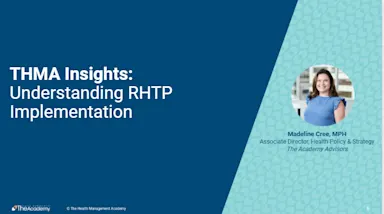
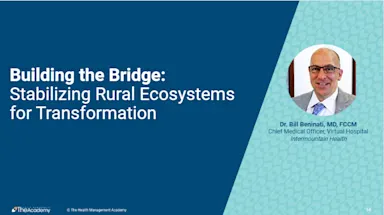
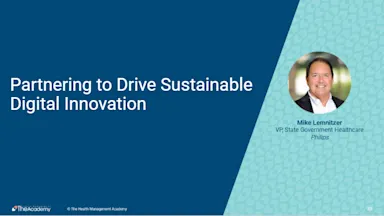
A recent virtual workshop co-hosted by Philips and the Health Impact Alliance brought together 16 health system leaders and 5 industry leaders to discuss one unanswered question: What is actually required to drive sustainable rural health transformation? Workshop participants heard from Madeline Cree, MPH (Associate Director, The Academy Advisors), Dr. Bill Beninati, MD, FCCM (Chief Medical Officer, Virtual Hospital, Intermountain Health), and Mike Lemnitzer (VP, State Government Healthcare, Philips) to explore Rural Health Transformation Program (RHTP) implementation and case studies highlighting Intermountain’s non-extractive “hub-and-spoke” model and Philips’ rural-focused health system partnerships addressing barriers to healthcare access.
Four Shared Challenges Set the Agenda
RHTP Misaligned with Foundational Needs: RHTP dollars are built for transformation, not the starting condition most rural hospitals are actually in. Some state funding structures risk pushing facilities toward decisions that don't serve their long-term goals.
Sustaining Care Close to Home: Scaling hub-and-spoke models that let local hospitals keep their billing and revenue, with value-based payment as the long-term path to sustaining virtual care
Workforce Innovation: Leveraging non-clinical and cost-effective “capacity extenders”—community health workers & community navigators; subspecialist recruitment remains difficult
Rural Social Drivers of Health (SDOH) Models: SDOH interventions must be developed with rural contexts in mind. The model that works is “broker, don’t build”—partner with trusted local organizations instead of duplicating what already exists.
Three Themes that we Heard
Design for sustainability, not for RHTP: RHTP was never designed to sustain rural ecosystems of care, and the economics of health system investments should consider how they will outlive the 5-year RHTP funding window and provide bridge funding to support short-term needs for rural hospitals. Intermountain Health’s hub-and-spoke model is grown mainly through value-based contracts and Philips builds new virtual care lines around reimbursement parity and legislation.
Keeping care local only works if it keeps the money local too: Intermountain’s “non-extractive” hub and spoke model leverages system resources to provide integrated services through its virtual hospital. Philips supports virtual rural monitoring hubs that are built to keep patients and the services they need inside the rural community, instead of requiring transfer to an urban center.
Rural innovation can be a blueprint for care delivery innovation generally: As margin and workforce pressures intensify for all health systems, resource optimization becomes increasingly crucial. Sanford Health’s EHR-mined, AI-powered colorectal cancer risk score provides an example of this—prioritizing scarce clinical resources for the highest-risk patients while reducing transportation burden for patients that don’t meet the risk threshold.
Why it Matters
RHTP was built to fund transformation, not to stabilize the financial starting point most rural hospitals are actually working from. Health systems that understand the limitations of RHTP will also understand that they will need to play a role in building the “bridge” that supports short-term needs for rural hospitals on the way to long-term transformation.