THMA 2026 Healthcare Financial Management Conferences
Engage directly with senior health system financial executives
THMA's healthcare financial management conferences are five invitation-only Executive Convening communities where senior health system finance leaders meet for a 2.5-day, retreat-style event. The 2026 calendar covers the Chief Financial Officer, Chief Revenue Cycle Officer, Market CFO, and Vice President of Finance Forums, along with the CFO Circle. Every event is held to a 1:1 ratio of health system to industry attendees, drawn from a membership of more than 2,000 health system senior executives.
Financial executives at the nation's health systems decisions carry the financial stability and long-term resilience of their hospital systems. The chance to discuss that pressure candidly with colleagues facing comparable challenges is what moves a finance team from diagnosis to action. THMA's finance forums offer a highly curated, peer-driven environment for strategic collaboration between the healthcare finance professionals of the nation's leading systems and the companies that support them.

What to Expect at a THMA Financial Management Conference
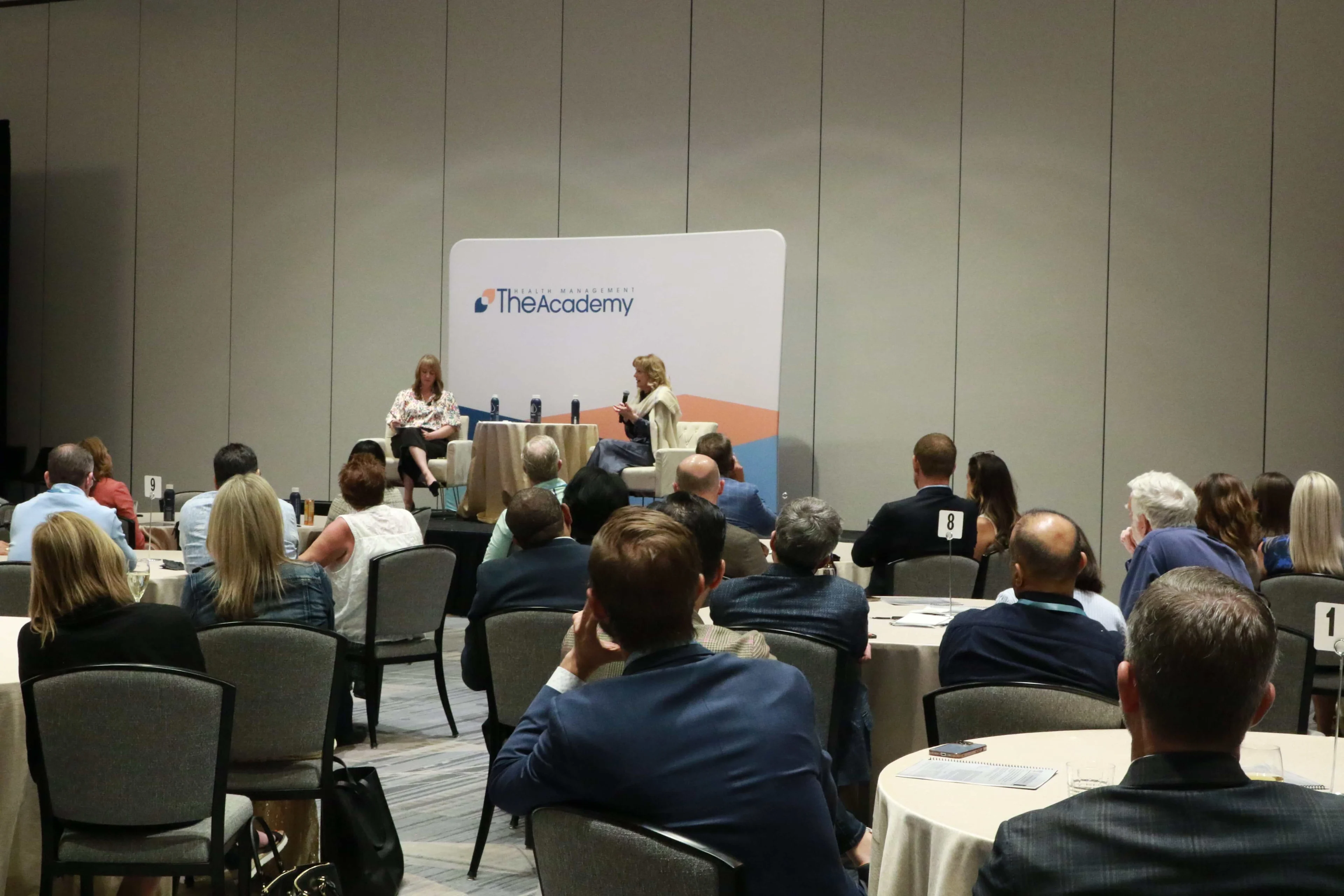
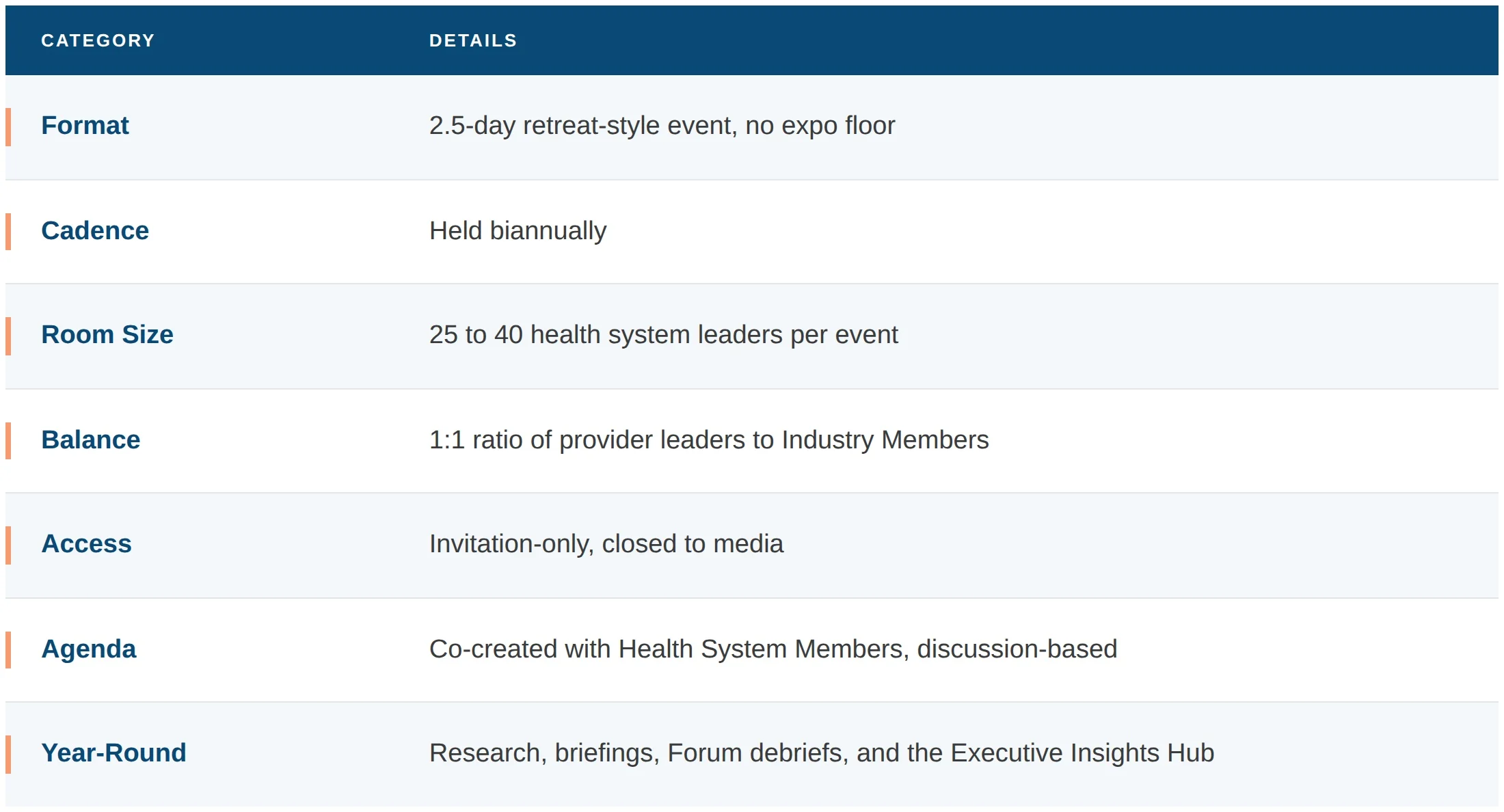
Every THMA Finance Forum runs on the same format. Two and a half days, retreat-style, closed to media, with the room balanced one-to-one between hospital and health system leaders and Industry Members.
The format is the result of intentional design. Large healthcare conferences are built to move volume through an exhibit hall. THMA's events are built so that 30 hospital leaders can say something in a room they would not say on a stage.
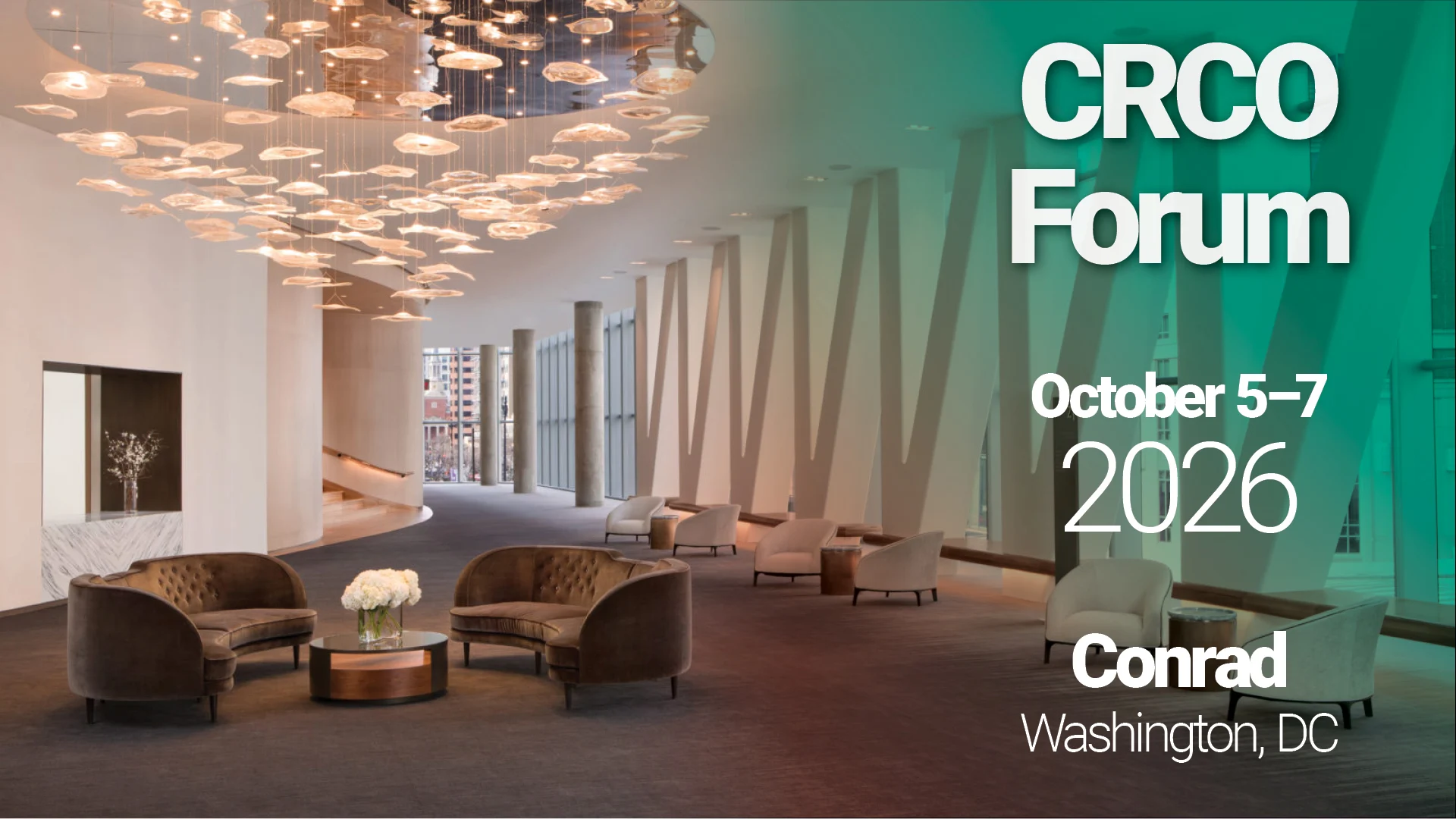
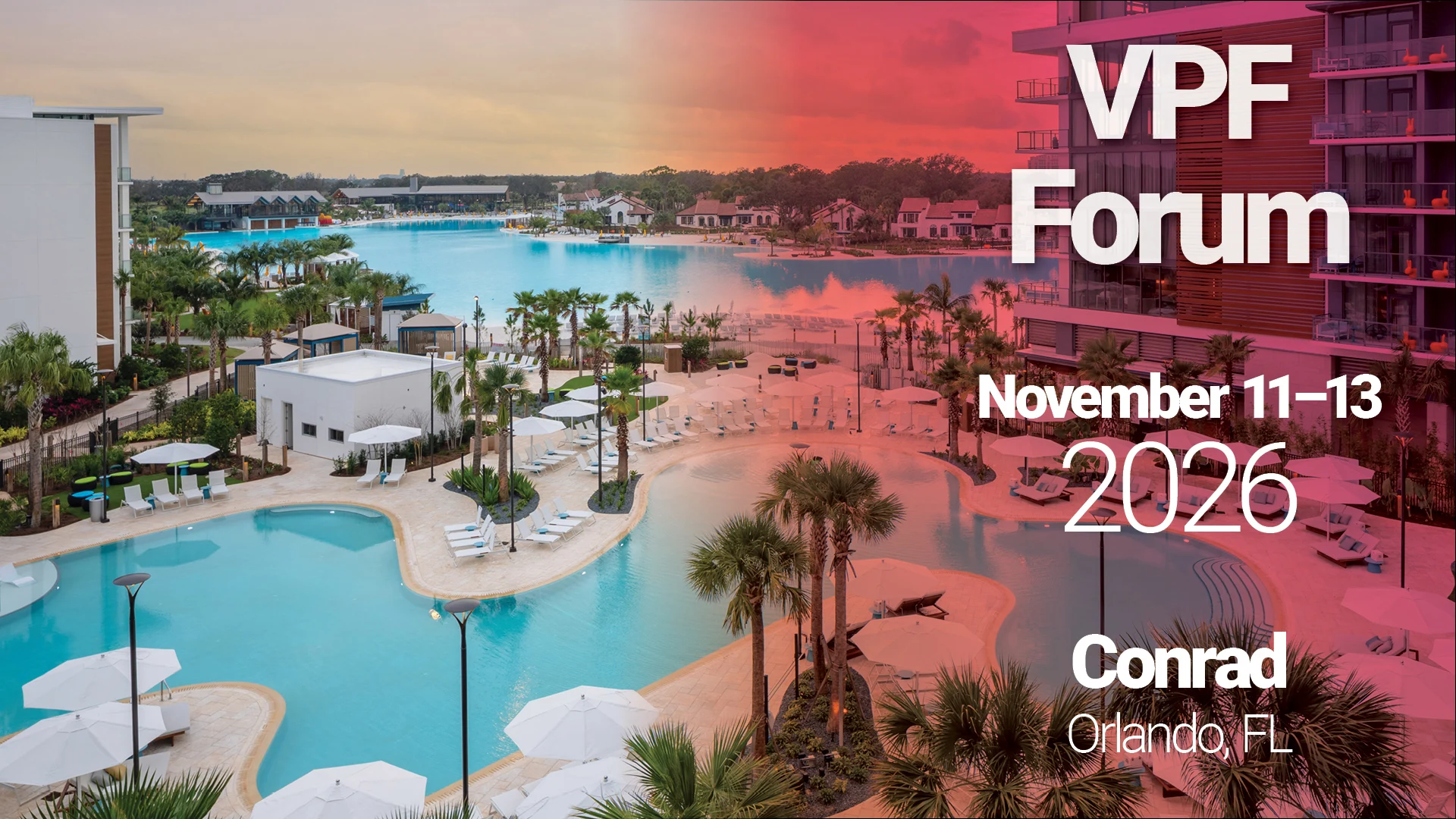
2026 Healthcare Finance Conference Dates and Upcoming Events
Each conference is hosted in a thoughtfully selected, retreat-style setting that supports candid conversation and unhurried work.



Health System Forum Members
















AI Cybersecurity and Financial Risk
Every AI tool introduced into financial and revenue cycle operations widens the surface an attacker can reach, and cybersecurity has moved from an IT line item to a standing item in financial risk conversations. Agendas cover how CFOs are folding AI-related exposure into vendor diligence, contract terms, business continuity planning, and the capital they hold against operational disruption. That work is forward-looking by necessity, because the threat profile of these tools is still taking shape and members are planning for a future in which the exposure grows.
Workforce Retention, Productivity, and Labor Cost
Retention and productivity reach the CFO's office as a cost problem before they reach it as a culture problem. Contract labor, premium pay, and turnover-driven vacancy all land in the same place. Workshops examine how systems are measuring productivity across clinical and administrative functions, what retention practices have held up against sustained labor demand, and how to model the return on a workforce investment. These workshops draw on what participants have tried in their own hospital operations rather than on published benchmarks alone.
Strategic Focuses for 2026
As financial pressure intensifies, our events bring health system and industry leaders together to work on five core areas in focused, retreat-style settings.
Washington Policy, Medicaid & Regulatory Navigation
THMA's Academy Advisors provide timely reads on Washington policy shifts and their effect on reimbursement, budgeting, capital strategy, and regulatory compliance. Attendees gain practical updates on Medicaid changes, provider taxes, DSH strategies, evolving payment models, and frameworks that support long-term financial sustainability.
Technology Cost, AI, and Meaningful Application
Members discuss the practical application of AI in healthcare financial management, including revenue cycle optimization and the governance frameworks that make implementation stick, with attention to evaluating the effectiveness of each product against financial outcomes. Executives from leading health systems share how they are using automation and data analytics to improve team efficiency, sharpen forecasting accuracy, and work within workforce constraints.
AI Cybersecurity and Financial Risk
Every AI tool introduced into financial and revenue cycle operations widens the surface an attacker can reach, and cybersecurity has moved from an IT line item to a standing item in financial risk conversations. Agendas cover how CFOs are folding AI-related exposure into vendor diligence, contract terms, business continuity planning, and the capital they hold against operational disruption. That work is forward-looking by necessity, because the threat profile of these tools is still taking shape and members are planning for a future in which the exposure grows.
Who Attends Our Financial Management Conferences
A typical event convenes roughly 25 to 45 health system finance leaders alongside a limited group of senior industry participants. Senior healthcare finance professionals from across the United States attend our healthcare financial management conferences for the closed-door setting, where frank conversation with senior counterparts is possible, and for the knowledge sharing that follows. As one senior financial executive said, "This is where C-suite executives take the armor off, and we all benefit from that level of sharing and exploration."
Health System Financial Decision Makers
This is an intimate, confidential space for executive-level engagement. Our curated attendees include chief financial officers, chief revenue cycle officers, and their VP-level counterparts from some of the country's largest health systems. Members find that our conferences give them access to cross-functional C-suite peers, which widens the context of a conversation and produces better questions. Sessions also create room for peer-to-peer networking and collaborative problem-solving among healthcare finance professionals. Many members have participated for 20 years or more because they find the right people in the room and leave with workable answers to persistent problems.
For financial executives whose remit reaches into enterprise strategy and governance, our cross-functional executive leadership conferences run on the same model.
Healthcare Industry Executives
Solving today's healthcare problems takes a web of trusted partners from inside healthcare and from affiliated industries. Discussion with industry participants brings new findings and practical approaches to problems that look intractable from one seat. We hold a maximum 1:1 health system to industry ratio at every event and cap industry participation at two executives per company, which keeps the room weighted toward peer interaction. The industry attendees at our healthcare financial management conferences come to listen, contribute, and build lasting connections. They return year after year for the relationship building and for an accurate read on where C-suite pain points sit. Our members remark that the collaboration creates productive synergy.
Our view of how financial strategy shapes industry collaboration covers this dynamic in more depth.
Is a THMA Financial Management Conference Right for You?
We have opened seats and are seeking healthcare companies to join our community of health system financial decision-makers. You may be a good fit if you are:
Looking to develop long-term relationships with health system influencers and key decision makers, not just hit year-end target lead goals.
Providing an innovative solution designed to solve health systems' pressing problems
Passionate about sharing and absorbing industry knowledge and thought leadership
A Director or higher commercial role
An organization with $25M+ in annual operating revenue
If that describes your company, register your interest and we will walk you through which of the five conferences fits your commercial focus. Guidance on how to choose the right conference may also help you narrow it down before you apply.

Frequently Asked Questions
What is Executive Convening?
Executive Convening is The Health Management Academy's in-person Forum platform that brings health system C-suite leaders together with a curated group of industry executives in small, peer-focused communities. Each community meets in 2.5-day, retreat-style events supported by year-round research, briefings, and debriefs that help members translate conversations into commercial and strategic action.
What are THMA's healthcare financial management conferences?
THMA's healthcare financial management conferences are a set of Executive Convening communities focused on health system finance leaders, including the Chief Financial Officer Forum, the Chief Revenue Cycle Officer Forum, and the Vice President of Finance Forum. These events give healthcare finance professionals and select industry partners a dedicated space to examine margin pressure, policy risk, growth strategy, and operational financial problems together.
How many people attend a THMA healthcare finance conference?
These conferences convene senior leaders such as CFOs, CRCOs, and VPs of finance from leading systems across the United States, which keeps discussion rooted in real decision-making and day-to-day accountability.
Which health system leaders attend these conferences?
The financial management Forums convene senior executives such as Chief Financial Officers, Chief Revenue Cycle Officers, and VPs of Finance from leading health systems across the United States. A typical event includes roughly 25 to 45 health system finance leaders, often joined by emerging successors from THMA Fellowship programs, which keeps discussions rooted in real decision-making and day-to-day accountability.
Who from outside health systems are these events designed for?
These events are designed for senior leaders at companies whose solutions directly affect health system financial performance, such as CEOs, Chief Growth Officers, commercial leaders, and VPs overseeing finance, revenue cycle, or performance partnerships. Ideal participants are executives who can speak credibly about financial outcomes, engage as peers with CFOs and their teams, and commit to long-term partnership rather than transactional selling.
How are these events different from other healthcare financial management conferences?
Our conferences are small, curated, and relationship-focused rather than larger exhibits at a convention center. Each event maintains a strict 1:1 ratio of provider to industry organizations, limits industry attendees to two executives per company, and replaces exhibit halls with member-led discussion, working sessions, and reception-style networking. The emphasis is on candid dialogue about real financial decisions, not vendor pitches or high-volume traffic.
What kinds of topics do the financial Forums focus on?
These events focus on live issues facing healthcare finance leaders, including margin recovery, payer and policy risk (for example, OBBBA and H.R.1), Medicaid and Medicare reimbursement, site-neutral payment pressure, cost management, and population health economics. Recent agendas have included work on payer joint ventures, microhospital and ASC joint ventures, AI in revenue cycle management, uncompensated care trends, and strategic financial planning in volatile environments.
How do these conferences help finance leaders benchmark performance against industry standards?
Benchmarking happens through direct comparison behind closed doors rather than through a published report. Attendees work through the same operating metrics with counterparts at systems of comparable size and structure, which surfaces the practices behind a result and not only the result. That context is what tells a CFO whether a given cost trend or denial rate is a genuine outlier for a system like theirs, which is a judgment average market data cannot make for them.
Do these conferences address AI cybersecurity risk in healthcare finance?
Yes. As AI tools spread deeper into financial and administrative operations, cybersecurity exposure has become a standing item in financial planning conversations. Sessions cover how CFOs are handling AI-related exposure in vendor diligence, contract terms, business continuity planning, and capital reserved against operational disruption.
How do these events help industry members build relationships with senior finance executives?
Each event is structured to create repeated, meaningful interaction between industry executives and member leaders across sessions, small group discussion, and informal social time. Industry members can contribute perspective in member-led sessions, participate in exchanges on topics like cost management and risk modeling, and continue conversations at dinners and receptions, which helps move a connection from introduction to trusted dialogue over time.
What outcomes can industry members expect from attending a financial management conference?
Industry members typically use these events to open or deepen executive relationships, stress-test their value propositions against live CFO and margin priorities, and inform pipeline strategy with current market intelligence. Many track outcomes such as the number of executive touchpoints, follow-up meetings scheduled, influenced pipeline, and progress on key accounts where participants are signers or champions, using our debriefs and research to support internal follow-through.
How often do these conferences meet, and what is the format?
Each conference meets twice per year in 2.5-day, in-person retreats hosted at destination venues that support focused work and unhurried conversation. Agendas blend member-led case studies, policy and regulatory briefings, issues sessions on topics like cost management or uncompensated care, and structured networking, all designed to translate market complexity into practical next steps for both members and industry participants.
Do these events address policy and regulatory changes affecting healthcare finance?
Yes. Our financial management events routinely feature Washington-focused briefings and case discussion that translate new policy and regulatory shifts into financial implications for hospital systems. Recent sessions have explored Medicaid financing changes under OBBBA, site-neutral payment proposals, Medicare Advantage risk, and the effect of federal legislation on capital planning and risk management.
What year-round resources support my team beyond the in-person events?
Industry members gain access to the Executive Insights Hub, which includes Quarterly Trends Readouts, the Executive Edge briefing, Behind the Forum Debriefs, webinars, and Healthcare Bootcamp learning modules. These resources help sales, product, strategy, and executive teams stay current on CFO concerns between events and share what surfaced with colleagues who were not in the room.
How are companies selected to participate in the financial management communities?
We hand-select companies for each conference based on their ability to contribute meaningful thought leadership, align with member financial priorities, and engage at an executive level. Selection emphasizes long-term partnership potential, a demonstrated commitment to improving financial sustainability and care quality, and a willingness to participate in open, peer-focused dialogue rather than transactional selling.
How should my team prepare to get the most value from a financial management conference?
Teams get the most value when they arrive with clarity on their top member accounts, a point of view on issues such as margin recovery, policy exposure, AI adoption, or cost management, and specific questions for CFOs, CRCOs, and VPs of finance. Members often review Executive Insights Hub content, register for the pre-event webinar, and align internally on target relationships and follow-up plans so that conversations in the room translate quickly into action afterward.
Join the Financial Management Community
Seats are limited and filled by invitation. THMA connects healthcare executives and industry innovators who are shaping the future of healthcare delivery, and the fastest way in is to tell us where your organization fits. If you belong in these rooms, apply to join, and we will connect you with the Forum where your innovation agenda lands closest to the room's priorities.
Apply Now